
Safari packing checklist anxiety usually comes from one thing: you don’t know what will actually matter once you’re bouncing around in a dusty vehicle, dealing with big temperature swings, and trying to stay comfortable without overpacking. This guide is built for that reality, not for perfect Instagram flat-lays.
If you’re traveling from the U.S. to Africa for the first time, the small details can make the biggest difference, like the right fabric, the right bag, and what to keep on your person during game drives. I’ll walk you through a practical list, then help you tailor it to where you’re going, how long you’re staying, and what style of safari you booked.
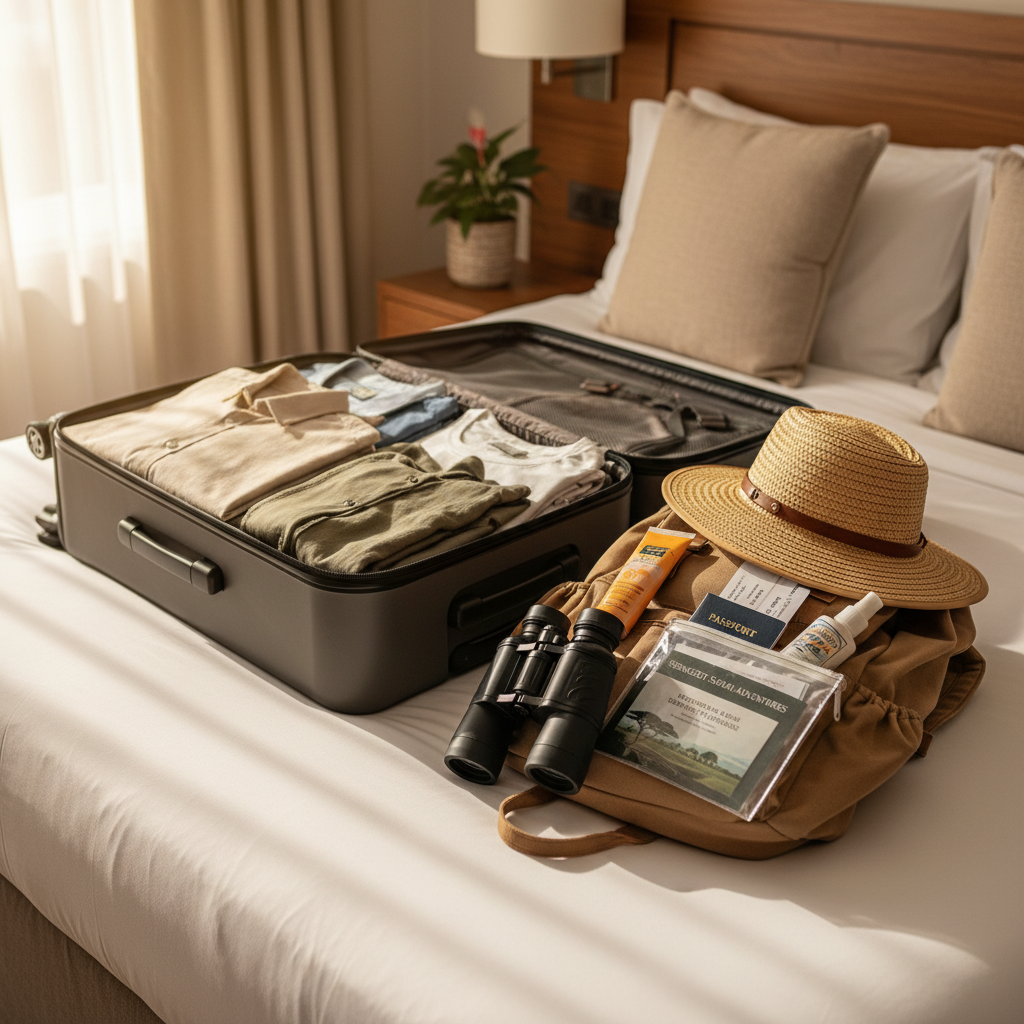
One quick expectation-setting: “Africa” is not one climate, and safari logistics vary a lot by country, park, and accommodation type. A lodge with laundry changes your plan, a mobile tented camp changes it again. Use the checklist below as your base, then tweak with the self-check section.
What shapes your safari packing checklist (more than people think)
Before you start tossing items into a suitcase, decide what kind of trip you’re actually taking. A few factors tend to drive 80% of your packing decisions.
- Season and daily temperature range: Many safari regions feel chilly at dawn and warm by midday, so you’ll want layers more than bulky coats.
- Safari style: Driving safaris call for dust protection and camera support, walking safaris lean toward ankle coverage and comfort.
- Luggage limits: Small bush flights often have strict weight and soft-bag requirements, your operator usually shares the exact limit.
- Laundry availability: Many lodges offer same-day or next-day laundry, which can dramatically cut clothing volume.
- Personal comfort needs: If you get cold easily, burn easily, or have sensitive skin, bring the items that keep you regulated.
According to the U.S. Department of State, travelers should review destination-specific health and safety information before international trips, which can affect what you carry and where you keep it.
The core safari packing checklist (the essentials)
This is the “don’t overthink it” foundation. For most trips, these items cover the real-world basics without turning your bag into a brick.
Clothing (aim for mix-and-match)
- Neutral tops (tan, olive, gray): 4–6 breathable shirts, including at least one long-sleeve for sun and insects
- Lightweight pants: 2–3 pairs, ideally quick-dry
- Warm layer: fleece or light insulated jacket for early mornings
- Shell layer: packable rain jacket or windbreaker
- Sleepwear and underwear: enough for 3–5 days if laundry exists
- Socks: 3–6 pairs, consider merino or hiking socks for comfort
- One nicer outfit: for lodge dinners if you want, many places stay casual
Footwear
- Comfortable closed-toe shoes: trail runners or light hikers
- Camp shoes: sandals or slides for downtime
Personal protection
- Wide-brim hat or cap with neck coverage
- Sunglasses with UV protection
- Sunscreen (reef-safe where applicable) and lip balm with SPF
- Insect repellent (check local guidance for what’s effective)
Documents and money
- Passport plus copies (paper + a secure digital copy)
- Visa documentation if required
- Travel insurance details and emergency numbers
- Cards + small cash: tips often prefer small denominations
Health basics (keep it simple)
- Personal prescriptions in original containers
- Basic first-aid items: blister care, bandages, antiseptic wipes
- Motion sickness option if you’re sensitive on rough roads
- Any medical items you rely on (inhaler, EpiPen, etc.)
Health needs vary by destination and personal medical history. According to the Centers for Disease Control and Prevention (CDC), travelers should consult destination guidance and consider speaking with a travel health professional before departure.
Gear that makes game drives easier (and what to skip)
This is where a safari packing checklist can get noisy. A few pieces of gear genuinely improve your experience, and a few common buys usually end up unused.
Worth packing
- Binoculars: even a compact pair changes what you notice
- Camera setup you can handle: a long lens helps, but comfort matters more than max zoom
- Extra batteries and memory cards: lodges may have limited charging access during drives
- Daypack: small, comfortable, easy access
- Reusable water bottle: hydration is a constant
- Power bank: especially helpful on travel days
Usually skippable (unless you’re sure)
- Heavy tripod: many travelers prefer a small bean bag or resting the camera on the vehicle frame, subject to your operator’s rules
- Too many outfits: laundry often makes a capsule wardrobe plenty
- High-shine or bright clothing: can be distracting and shows dust fast
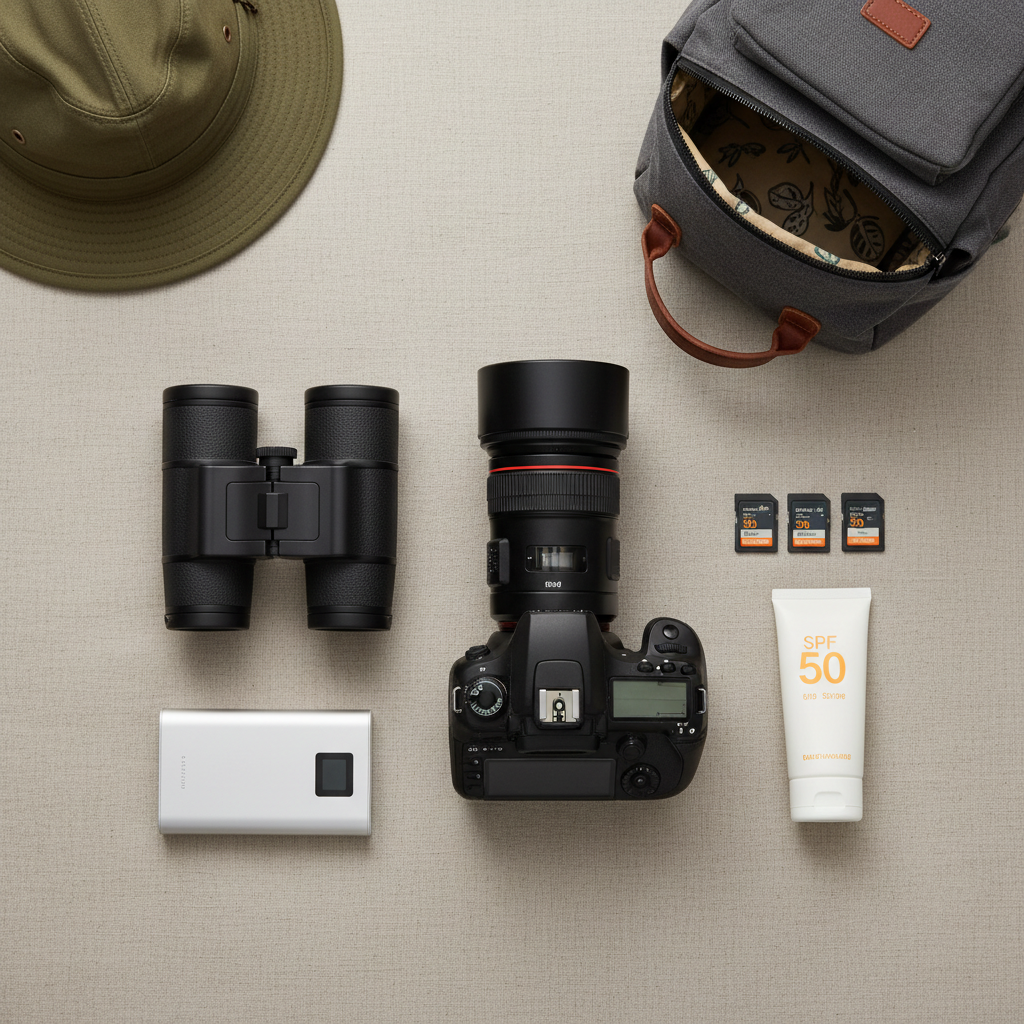
Key point: The best gear is the gear you’ll actually use at 5:45 a.m. when it’s cold, you’re half-awake, and the vehicle is moving.
Quick self-check: what kind of safari packer are you?
If you answer “yes” to any of these, adjust your safari packing checklist accordingly.
- I’m taking bush flights. Plan for a soft-sided duffel and strict weight limits, leave hard suitcases at home.
- I get cold easily. Add a beanie, gloves, and an extra warm mid-layer, mornings can feel surprisingly sharp.
- I burn fast. Prioritize UPF long sleeves, a neck-covering hat, and reapplication-friendly sunscreen.
- I’m on a photography-focused trip. Add lens cloths, a simple dust cover, and a comfortable strap or harness.
- I’m doing a walking safari. Think ankle coverage, breathable long sleeves, and socks that prevent blisters.
- I’m traveling with kids. Pack a small comfort kit: snacks, wipes, extra layers, and a backup charger for devices.
Packing table: recommended items by category
Use this as a “last look” reference. Quantities assume a 7–10 day trip with at least some laundry access, adjust up if you know laundry won’t be available.
| Category | What to pack | Notes |
|---|---|---|
| Clothing | 4–6 tops, 2–3 pants, warm layer, rain shell | Neutral colors help with dust and blending in |
| Footwear | Closed-toe shoes + camp sandals | Break shoes in before you fly |
| Sun & bugs | Hat, sunglasses, sunscreen, repellent | Long sleeves often beat reapplying constantly |
| Documents | Passport, copies, insurance info, cards/cash | Keep originals on you during travel days |
| Electronics | Phone, charger, adapter, power bank | Outlets vary by country and camp |
| Safari gear | Binoculars, camera, batteries, memory cards | Bring lens cleaning wipes for dust |
| Health | Prescriptions, blister care, basic first aid | Medical needs vary, ask your clinician if unsure |
Practical packing tips (so you don’t fight your bag every day)
You can have the perfect list and still feel annoyed every morning if your bag setup is chaotic. These are small moves that usually pay off.
- Use packing cubes: one for tops, one for bottoms, one for underwear/socks, it keeps you from unpacking everything to find one item.
- Pack a “drive kit” in your daypack: sunscreen, repellent, lip balm, lens cloth, water bottle, light layer.
- Separate dusty items: a simple laundry bag helps, dust travels fast.
- Carry-on strategy: keep one full outfit, essential meds, and chargers in your carry-on in case checked luggage arrives late.
- Don’t pack too tight: you’ll come home with souvenirs, plus used clothes take more space.
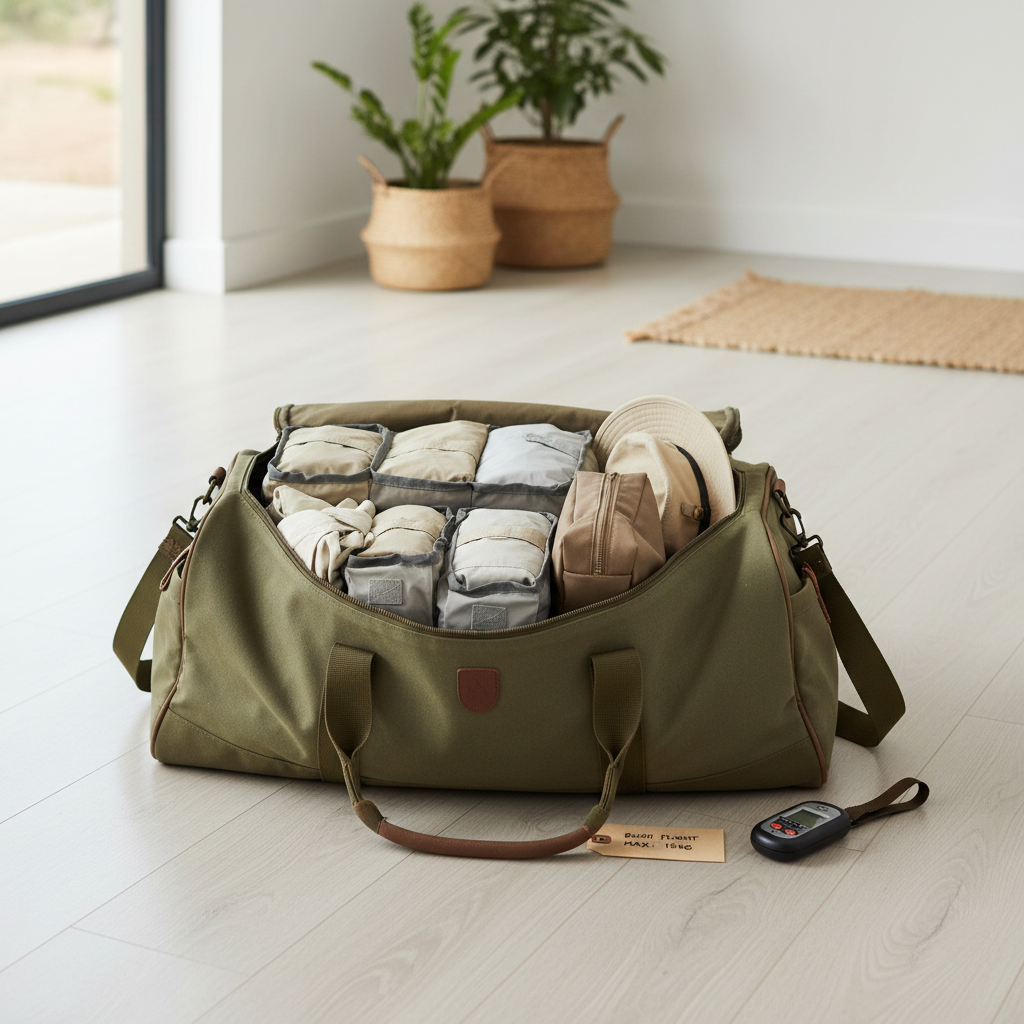
Key point: If your operator mentions light aircraft, treat baggage rules as real, not optional. In many cases, it’s a safety and balance issue, not a preference.
Common mistakes (and how to avoid them)
Most safari packing mistakes come from guessing wrong about comfort. Here are the ones I see repeated often.
- Overpacking “just in case” outfits: you end up rotating the same 4 items anyway, build a small capsule wardrobe and relax.
- Ignoring mornings: people pack for the midday sun, then freeze at dawn, add a warm layer that fits under a shell.
- Bringing fragile, fussy fabrics: dust and quick wash cycles are not kind to delicate materials.
- Forgetting charging logistics: camps may have limited outlets or scheduled generator hours, a power bank removes stress.
- Skipping footwear prep: new shoes plus rough terrain equals blisters, test them at home.
When to get professional or operator advice
If you’re unsure about health-related items, it’s smart to ask someone who can speak to your situation. Travel medicine and vaccine guidance can vary by destination and your medical history, so consider checking with a travel clinic or your clinician.
Also ask your safari operator if you have any of these variables: internal flights with baggage caps, a walking safari component, special camera gear needs, or dietary and medication storage needs. They usually know what works in their camps better than any generic list.
Conclusion: pack light, pack smart, and keep one “grab bag” ready
A good safari packing checklist keeps you comfortable in shifting weather, ready for long drives, and calm when logistics get slightly messy. If you do nothing else, build around breathable layers, closed-toe shoes you trust, and a daypack stocked for mornings and dust.
Your next step: confirm baggage rules with your operator, then do a quick floor layout at home, if you can’t explain why an item is coming, it probably stays behind.
FAQ
- What colors are best for a safari packing checklist?
Neutral tones like tan, olive, and gray tend to work well because they show less dust and feel less visually loud in the bush. Many lodges also prefer guests avoid camouflage patterns, so when in doubt, keep it simple. - Do I need hiking boots for an African safari?
Often, no. For vehicle-based game drives, trail runners or light hikers usually feel more comfortable. If you’ll do serious walking or uneven terrain, boots can help, but comfort and break-in matter more than the label. - How many outfits should I pack for a 7–10 day safari?
Many travelers do well with 4–6 mix-and-match tops and 2–3 pants if laundry is available. If there’s no laundry, scale up, but try to avoid packing a unique outfit for each day. - Should I pack insect repellent or buy it there?
Either can work, but packing a small bottle avoids a first-night scramble. If you have sensitive skin or allergies, bringing a product you already tolerate can be the safer choice. - What should I keep in my daypack during game drives?
Think “comfort and quick access”: water, light layer, sunscreen, lip balm, repellent, sunglasses, camera wipes, and anything you can’t afford to lose. If you carry documents, keep them in a secure zip pocket. - Do I need a malaria kit or special medications?
This depends on the specific region and your health profile. According to the CDC, recommendations vary by destination, so it’s best to review current guidance and consult a travel health professional for personalized advice. - Is a hard-shell suitcase okay for safari travel?
Sometimes, but it can be a problem on bush flights that require soft-sided bags for small cargo holds. If your itinerary includes light aircraft, plan on a duffel and follow the operator’s luggage rules.
If you’re building your list and want a more customized plan, it can help to share your countries, travel months, and whether you have bush flights or walking safaris, then you can trim this safari packing checklist into a tight, realistic packing list you’ll actually enjoy using.