
sunscreen travel guide best is really about avoiding two predictable travel problems, getting burned on day one and realizing your “good” sunscreen is either leaking in your bag or useless for the place you’re in.
If you travel a lot, you already know sun exposure doesn’t look the same everywhere, a breezy beach day, a high-altitude hike, or a city trip with long walks can all add up fast, and travel routines make reapplying easier to forget.
This guide keeps it practical, how to pick a travel-friendly sunscreen, how to pack it without mess, and how to actually use it well across flights, road trips, cruises, and outdoors.
What “best” means in a sunscreen travel guide
People search for a “best” travel sunscreen, but in real life it depends on where you’re going, how long you’ll be outside, and what you’ll tolerate on your skin.
- For beach and water: water-resistant (40 or 80 minutes) plus a plan to reapply after swimming or towel drying.
- For high UV places: higher SPF and more frequent reapplication, especially at altitude or near reflective surfaces like water and snow.
- For everyday city travel: comfortable texture matters most, because you’ll actually wear it.
- For sensitive skin: mineral filters (zinc oxide, titanium dioxide) often feel gentler, though they can leave a cast on deeper skin tones.
According to the American Academy of Dermatology, most adults need about one ounce (roughly a shot glass) to cover the body, and sunscreen should be reapplied about every two hours, or sooner after swimming or sweating.
Quick self-check: your trip type and your sunscreen needs
If you want the sunscreen travel guide best answer for your own trip, start with this quick checklist, it prevents overthinking and bad last-minute buys.
- Will you be outdoors 2+ hours/day? Prioritize water resistance and comfort for reapplication.
- Is the destination humid or very hot? Lighter lotions, gels, or fluids often feel less sticky.
- Will you swim, snorkel, ski, or hike? Add a stick for touch-ups and a bigger body sunscreen for full coverage.
- Are you bringing kids? Choose formulas you can apply quickly, and bring enough for the whole trip.
- Any fragrance sensitivity or eczema? Consider fragrance-free mineral options, patch testing is still smart.
How to choose travel-friendly sunscreen (without the hype)
In many cases, the “best” travel sunscreen is the one you’ll use at the right amount, at the right times, without hating the feel.
What to look for on the label
- Broad spectrum: covers UVA and UVB.
- SPF 30 or higher: common baseline for day-to-day, higher can make sense for intense sun, but application still matters.
- Water-resistant: important for beach, pool, sweaty walks, and humid destinations.
- Expiration date: old sunscreen can be less reliable, don’t gamble on a half-used bottle from last summer.
Texture choices that travel well
- Lotions/creams: easiest for full-body coverage, usually best value per ounce.
- Fluids: great for face, often layer well under makeup.
- Sticks: ideal for ears, around eyes, nose bridge, and on-the-go touch-ups.
- Sprays: convenient but easy to underapply, and wind makes coverage uneven.
Packing sunscreen for flights and road trips (leaks and TSA)
Most travel sunscreen failures are boring, the cap cracks, the tube oozes, or it gets confiscated because you forgot the rules. Fixable problems, if you pack like you mean it.
Carry-on vs checked bag
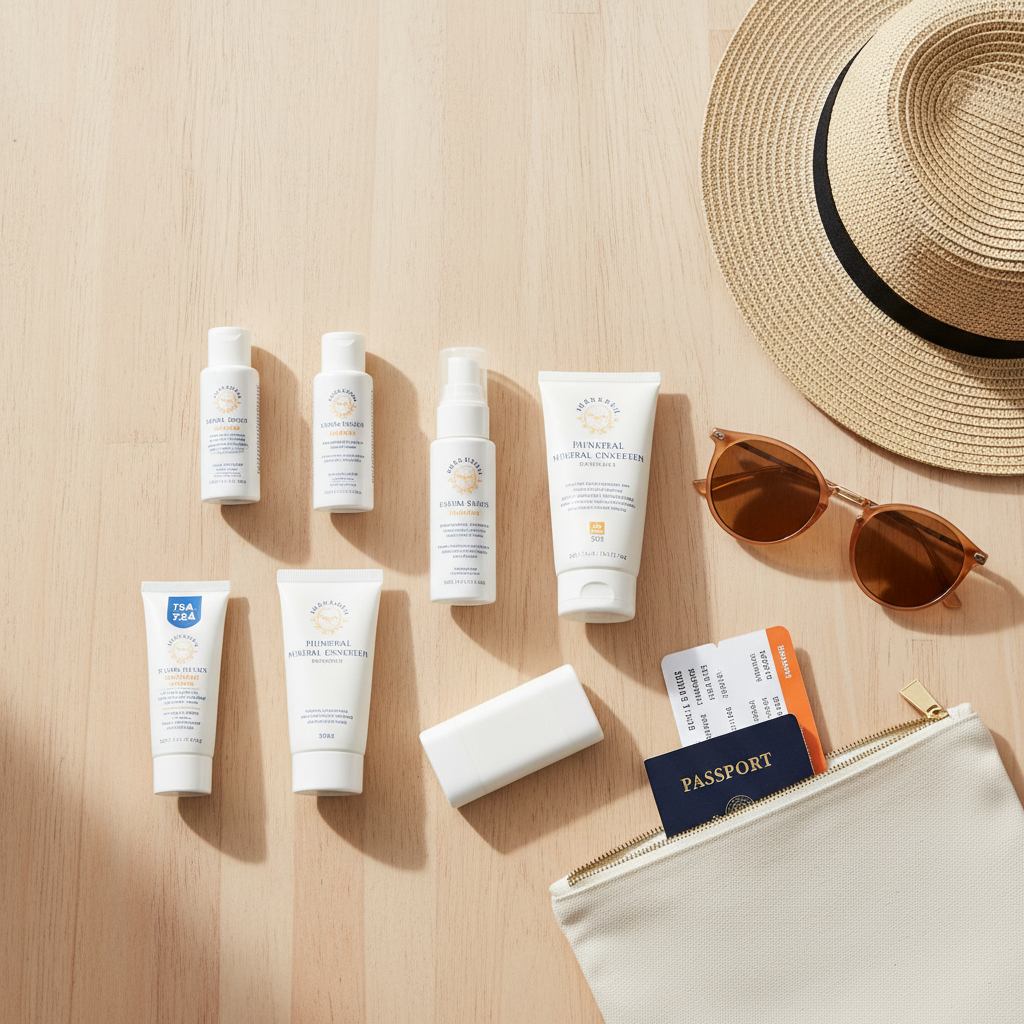
- Carry-on: follow TSA liquid rules, keep sunscreen in your liquids bag if it’s a lotion or fluid.
- Checked bag: safer for larger bottles, but pressure and heat can still cause leaks.
Leak-proof packing moves that actually work
- Use travel-sized, screw-top containers rather than flimsy flip caps.
- Put each sunscreen in a small zip bag, even if it claims “leak-proof.”
- Keep sunscreen away from direct heat in the car, high temperatures can change texture and performance.
- If you decant, label the bottle with SPF and date, so you don’t end up with mystery lotion on day three.
According to the Transportation Security Administration, liquids, gels, and aerosols in carry-on generally must follow the 3-1-1 rule, so plan sizes accordingly, and check current guidance if you’re unsure.
How much to apply, when to reapply, and where people miss
This is where a sunscreen travel guide best becomes less about brands and more about habits. Underapplying is common, and travel days make it worse.
Practical application guide
- Face and neck: apply as the last step of morning skincare, then give it a minute to set.
- Body: apply before you get dressed if possible, it reduces missed spots on shoulders and back.
- Reapply: aim for about every two hours outdoors, and after swimming, sweating, or towel drying.
Commonly missed spots
- Tops of ears, behind ears
- Back of neck, hairline, scalp part
- Tops of feet and toes in sandals
- Hands, especially if you wash them often
- Under swimsuit straps and edges, where shifting fabric exposes skin
According to the Centers for Disease Control and Prevention, sunscreen works best as part of a broader approach, shade, protective clothing, and avoiding peak sun can reduce UV exposure further.
Destination-specific tips (beach, mountains, city, snow)
You can use the same sunscreen in most places, but your reapplication timing and add-ons should change.
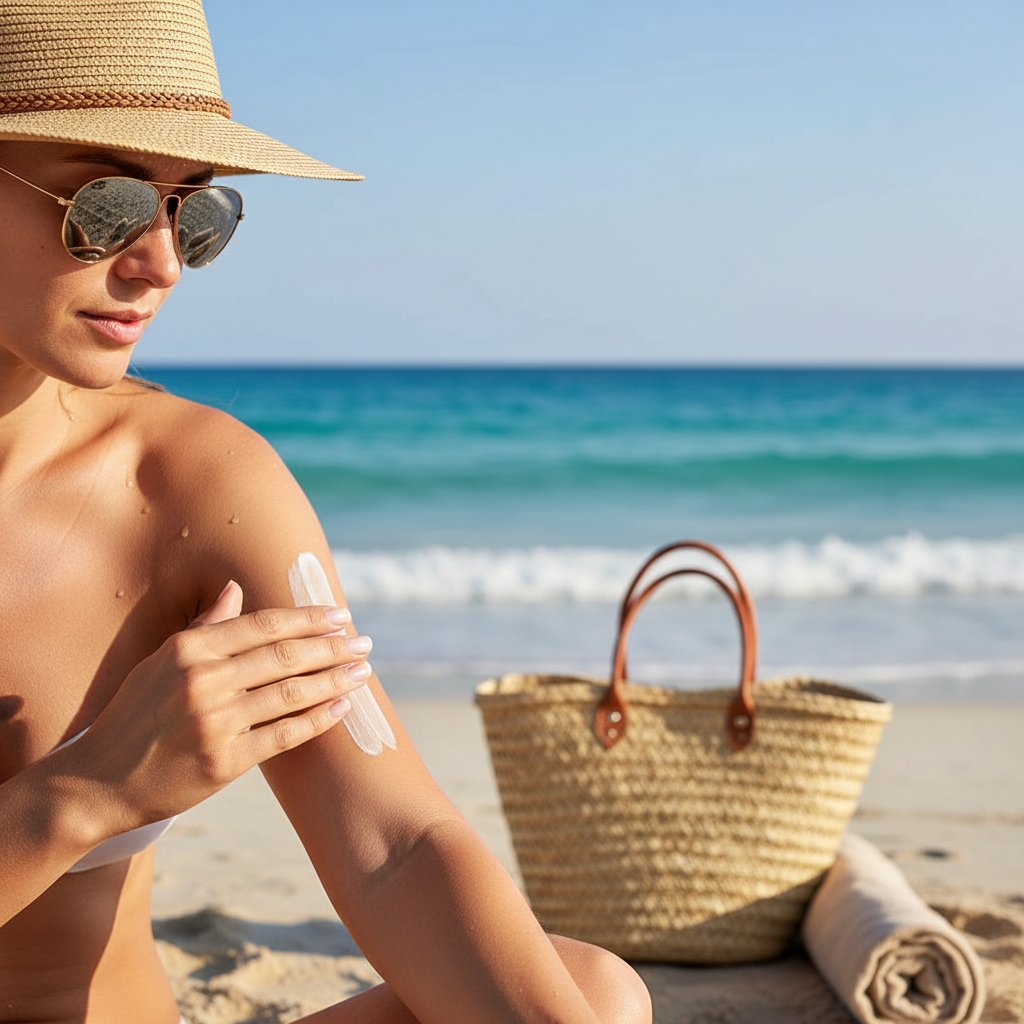
- Beach and pool: bring enough product, reapply more often than you think, and keep a stick for the face to avoid stinging eyes.
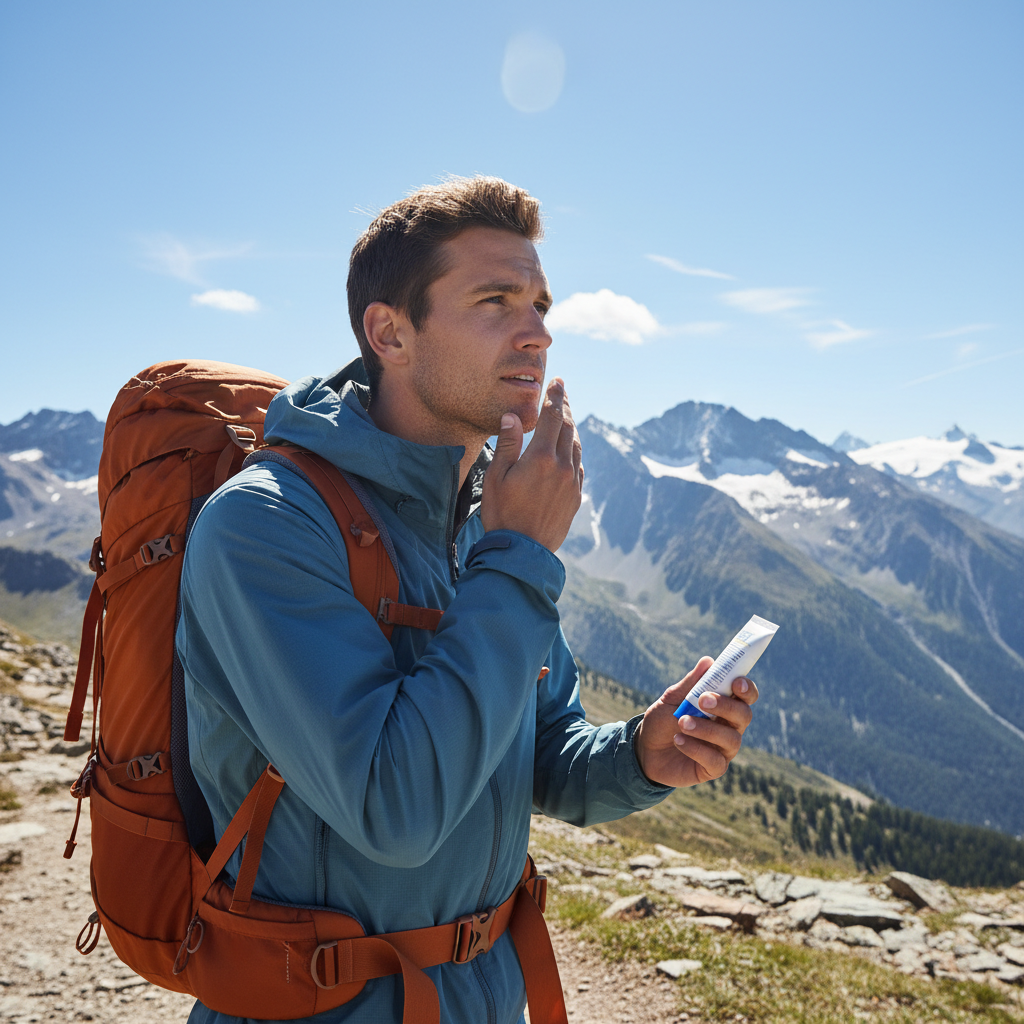
- Mountains: UV exposure can be stronger at altitude, and wind can hide how much sun you’re getting, reapply even if it feels cool.
- City sightseeing: carry a small sunscreen stick or mini tube, the best plan is the one you can do between stops.
- Snow trips: reflection off snow increases exposure, don’t skip sunscreen just because it’s cold.
Simple travel routines that prevent sunburn (even when you’re busy)
Most people don’t forget sunscreen because they don’t care, they forget because travel breaks routines. Build small triggers and you’ll use it more consistently.
- Put sunscreen with your toothbrush: if you brush, you see it.
- Set a phone reminder: one midday alert covers many itineraries.
- Keep a mini in your day bag: if it’s in the hotel, it doesn’t exist.
- Pair with clothing: hats and UV-protective shirts reduce how much skin needs frequent reapplication.
Comparison table: pick the right format for your trip
Use this table as a quick decision tool when you’re packing, it’s not about “one best,” it’s about the best match.
| Format | Best for travel | Pros | Tradeoffs |
|---|---|---|---|
| Lotion/Cream | Beach days, full-body coverage | Even application, cost-effective | Can feel heavy, can leak if cap is weak |
| Fluid | Face, daily city wear | Layers well, often less greasy | Smaller bottles run out fast |
| Stick | Touch-ups, kids, around eyes | Mess-free, carry-on friendly | Slow for large areas, easy to miss spots |
| Spray | Quick application outdoors | Fast, convenient | Underapplication risk, wind issues |
Common mistakes that make sunscreen “not work”
If you’ve ever felt like sunscreen failed you, it’s often one of these, and fixing it is usually simpler than switching brands ten times.
- Applying too little: you get a false sense of security, then burn.
- Waiting until you’re already outside: it’s easy to miss spots in a rush.
- Assuming makeup equals protection: many products include SPF, but the amount applied may be far less than testing conditions.
- One-and-done application: outdoors exposure adds up, reapplication matters.
- Skipping other protection: hats, sunglasses, and shade still matter.
When to consider professional advice
Travel sun protection is usually straightforward, but some situations deserve extra caution. If you have a history of skin cancer, photosensitivity, are using prescription retinoids, or get severe reactions to sunscreen, it’s worth asking a dermatologist for personalized guidance.
If you develop a significant burn with blistering, fever, or dehydration symptoms, seeking medical care is generally recommended, especially when you’re far from home and don’t know local resources.
Key takeaways you can use on your next trip
- Choose broad-spectrum SPF 30+ and match water resistance to your activities.
- Pack for reality: small daily carry + enough backup product for the whole trip.
- Reapply with a trigger: midday reminder, post-swim, or before your next activity.
If you want to act today, do two things, check expiration dates now, and add a travel-size face option plus a stick to your day bag so reapplication stops being a debate.
FAQ
What SPF should I bring if I’m traveling somewhere very sunny?
Many travelers start with broad-spectrum SPF 30 and go higher when they expect long outdoor days, water time, or strong reflected sun. Higher SPF can help, but frequent, generous application still does most of the work.
Is mineral sunscreen better for travel than chemical sunscreen?
It depends on your skin and preferences. Mineral formulas often suit sensitive skin, while many chemical formulas feel lighter and easier to spread, which can make consistent use more likely.
How do I reapply sunscreen over makeup while traveling?
A sunscreen stick can work well for targeted areas, and some people prefer a lightweight lotion dabbed and smoothed carefully. If you rely on SPF in makeup alone, coverage is often thinner than you expect.
Can I bring sunscreen in my carry-on?
Usually yes, but it needs to follow TSA rules for liquids, gels, and aerosols. A solid stick is often the least stressful option for carry-on, while larger bottles are easier in checked luggage.
Why do I still tan or freckle even when I use sunscreen?
Sunscreen reduces UV exposure but may not block it entirely, and missed spots or underapplication are common. Clothing, shade, and timing your outdoor hours can add meaningful protection.
Does sunscreen expire faster in a hot car or beach bag?
Heat can degrade products or change texture over time, so it’s safer to store sunscreen out of direct sun and extreme temperatures. If it smells off or separates heavily, replacing it is a reasonable call.
How much sunscreen should I pack for a week-long beach trip?
It varies by how many people you’re protecting and how often you reapply. If you’ll be outdoors daily and swimming, bring more than a single small bottle, running out mid-trip is extremely common.
If you’re building a kit and want a more “grab-and-go” setup, aim for one comfortable face sunscreen, one larger body option, and a stick for touch-ups, that combo usually covers most itineraries without overpacking.