
How to clean a travel water bottle properly comes down to two things most people miss: cleaning the parts you can’t see (threads, gaskets, straw valves) and letting everything dry fully so funk doesn’t come right back. If your bottle smells “clean-ish” but still has a taste, that’s usually a sign something is trapped in a crevice, not that you need harsher soap.
It matters more than it sounds, because travel bottles spend a lot of time warm, closed, and jostled around with leftover coffee, electrolytes, smoothies, or just plain water that sat too long. That combo makes odors and biofilm easier to build up, especially in lids and straws.
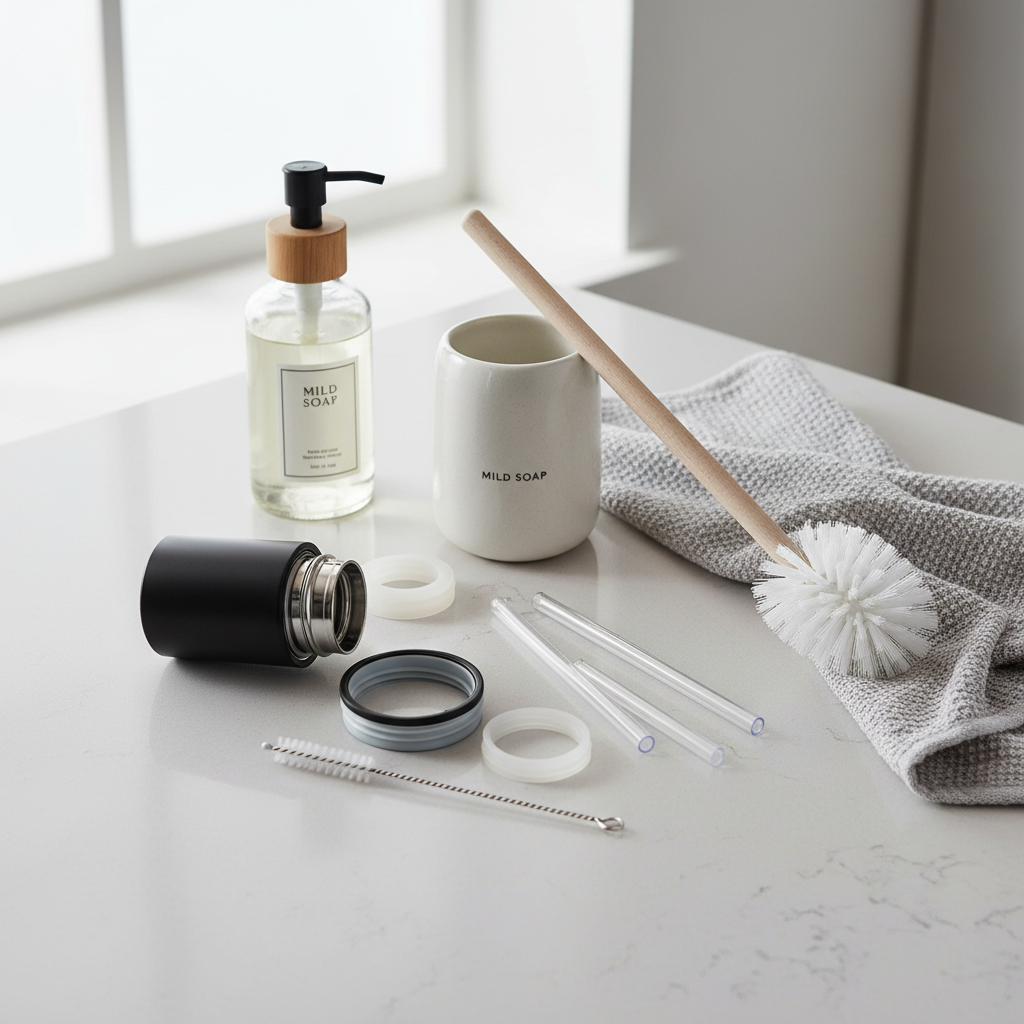
This guide gives you a realistic routine you can do on a weeknight, plus a deeper clean for when you notice mold spots, a sour smell, or sticky film. I’ll also point out where people waste time, like soaking the bottle while ignoring the lid seal.
What “properly” really means (and why bottles get gross)
A bottle can look spotless and still smell off, because buildup often forms as biofilm, a thin layer of microbes that clings to surfaces, especially around seams. If you’ve ever rinsed a bottle and it still tastes weird, that’s the usual culprit.
Common real-world triggers:
- Warm storage in a car, gym bag, or backpack.
- Sweet or creamy drinks like protein shakes, flavored water, coffee with milk, or juice.
- Complex lids with straws, flip spouts, springs, or hidden channels.
- Not drying fully before reassembling and closing.
According to CDC, cleaning and sanitizing food-contact surfaces helps reduce germs that can make you sick; a bottle you drink from all day counts as a food-contact surface in everyday life.
Quick self-check: which cleaning level do you need?
If you’re busy, don’t overcomplicate it. Use this quick checklist to pick the right approach.
- Daily rinse is enough if you only used plain water, no smell, no film, no visible spots.
- Standard wash if you used flavored drinks, the bottle sat overnight, or the mouth opening feels slippery.
- Deep clean + sanitize if you notice odor, black/pink spots, cloudy film, sticky residue, or a lid that smells worse than the bottle.
If you see mold or you’re immunocompromised, it may be smart to replace small parts like gaskets or straws rather than trying to rescue them.
Everyday routine (5–10 minutes): soap, friction, and airflow
For most people, the “proper” baseline is boring: mild dish soap, warm water, and enough scrubbing to break up film. Friction matters more than fancy cleaners.
Step-by-step
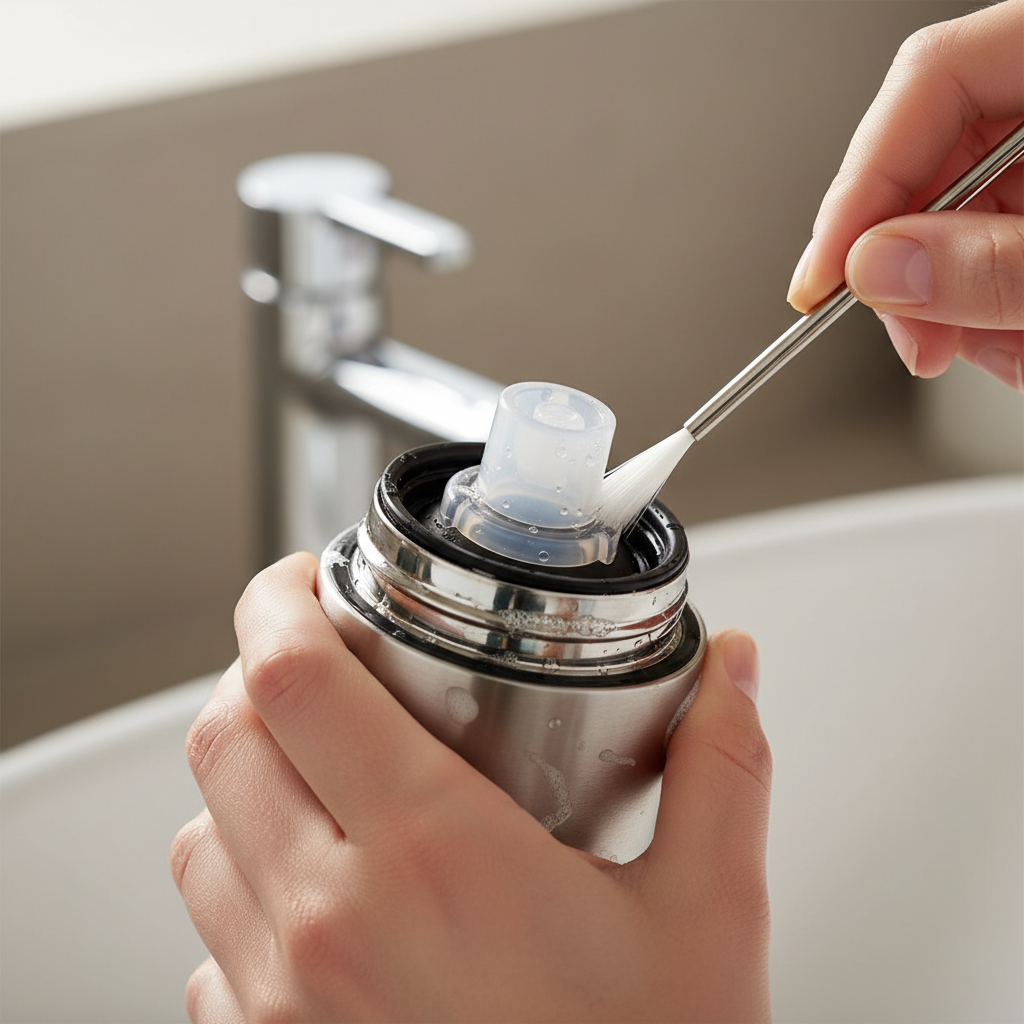
- Disassemble everything you can: lid, straw, bite valve, gasket, any removable spout pieces.
- Wash the bottle with warm water + dish soap, using a bottle brush to scrub the bottom and shoulder.
- Scrub the lid with a small brush (or clean toothbrush) around threads, sip hole, and any hinge areas.
- Clean the gasket separately, then inspect it for slime, discoloration, or cracks.
- Rinse thoroughly until there are no soap bubbles trapped in channels.
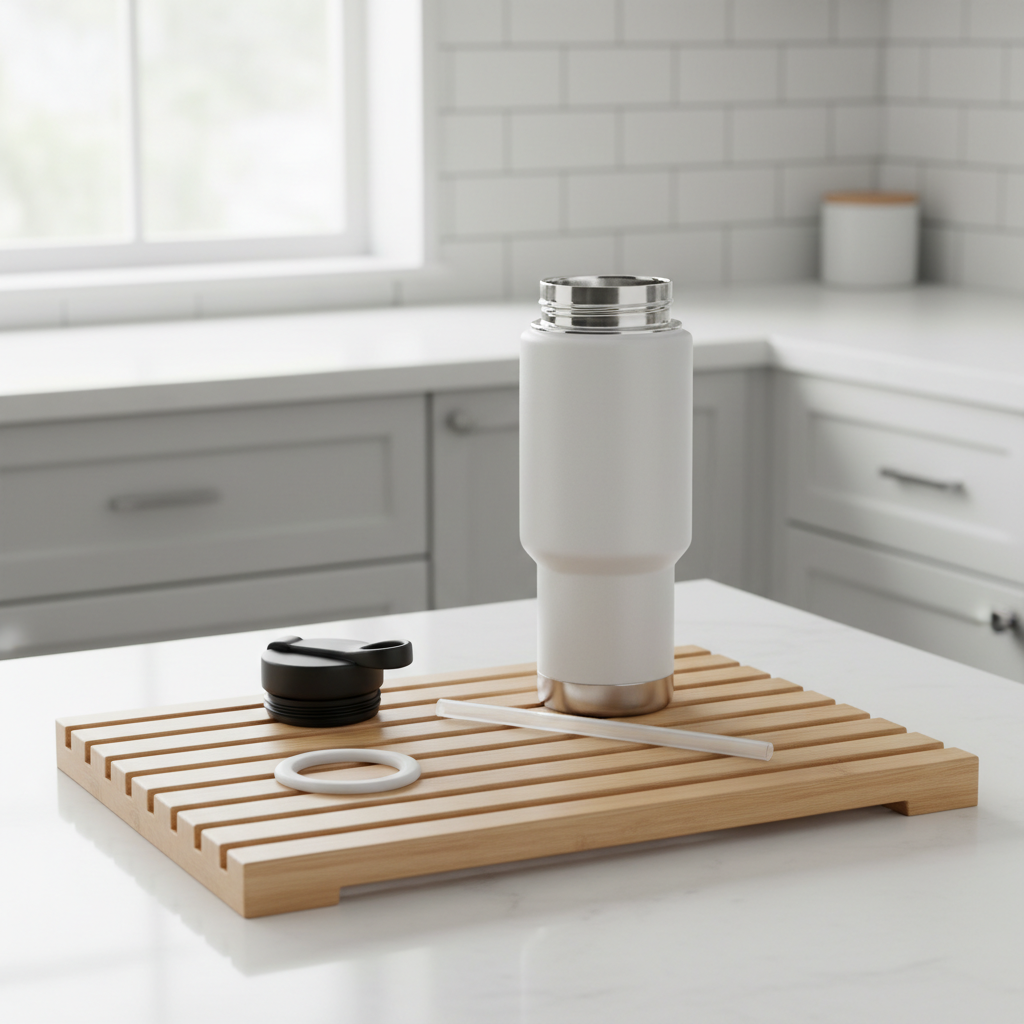
- Air-dry fully with parts separated, ideally lid upside down and bottle open.
Small habit that helps: when you’re done drinking for the day, leave the lid off at home so moisture can escape.
Deep clean when there’s odor, film, or mold (without going overboard)
When people search how to clean a travel water bottle properly, they usually mean “my bottle smells” or “there are spots.” In those cases, do two phases: remove gunk first, then sanitize. Sanitizing a dirty surface is where effort gets wasted.
Phase 1: remove buildup
- Fill the bottle with warm water + dish soap and let it sit 10–20 minutes.
- Scrub, especially the bottom edge and any interior ridge near the shoulder.
- Soak lid parts separately in warm, soapy water, then brush the channels.
Phase 2: sanitize (pick one method)
- Diluted bleach (effective, but be careful): Many public health guidelines support bleach solutions for sanitizing food-contact surfaces when used correctly. Use a very dilute solution, follow your bottle brand guidance, and rinse extremely well. If you’re sensitive to smells, this method can be annoying.
- Hydrogen peroxide (often gentler on odor): Can help with smells and light staining, but results vary by material and buildup.
- Vinegar: Useful for odor and mineral scale, but not a universal sanitizer for all situations; don’t treat it like a magic bullet.
According to EPA, disinfectants need correct concentration and contact time to work as intended, so if you sanitize, read labels and don’t freestyle stronger mixtures.
Material matters: stainless steel vs plastic vs insulated lids
Most cleaning routines work across materials, but a few differences save time and prevent damage.
| Material/Part | What it’s prone to | What usually works best |
|---|---|---|
| Stainless steel bottle body | Odor retention if stored closed, coffee/tea staining | Soap + brush; occasional baking soda paste for stains |
| Plastic bottle body | Odor absorption, cloudiness, scratches that hold film | Gentle scrubbing; avoid abrasive pads; replace if deeply scratched |
| Silicone gasket/straw | Hidden slime, lingering smell | Separate wash; periodic sanitize; replace if smell persists |
| Insulated bottle cap/lid assemblies | Hidden channels, trapped moisture | Full disassembly; detail brush; extended air-dry time |
If your bottle is insulated, double-check the manufacturer’s care notes. Some lids have components that don’t love heat or prolonged soaking.
Dishwasher: when it helps, when it backfires
Dishwashers can be great for consistency, but only if your bottle is truly dishwasher-safe and you place parts correctly.
- Works well for stainless bodies and simple plastic bottles that are top-rack safe.
- Backfires when lids trap water after a cycle, or when heat warps gaskets and bite valves.
- Rule of thumb: if the lid has a straw valve or multiple seals, hand-wash the lid even if the bottle body goes in the dishwasher.
Also, dishwasher “clean” is not always “no smell.” If you pull it out and close it while still warm and damp, odors can return fast.
Common mistakes that keep the smell coming back
A lot of people wash more often and still feel stuck. Usually it’s one of these:
- Only cleaning the bottle body, while the lid gasket stays funky.
- Skipping friction, meaning you soak but don’t scrub threads and seams.
- Reassembling wet parts and closing the lid right away.
- Using abrasive scrubbers on plastic, which adds micro-scratches that hold residue.
- Overdoing strong cleaners, leaving chemical smell that feels like “still dirty.”
If your bottle “tastes like soap,” it’s often soap trapped in the lid channel. Take it apart, rinse longer than you think you need, then air-dry overnight.
When to replace parts or ask for help
Cleaning can fix a lot, but not everything. Consider replacement if:
- The gasket stays smelly after separate washing and a couple sanitize cycles.
- You see cracks, warping, or sticky texture on silicone or plastic parts.
- The bottle has deep scratches inside (common with older plastic bottles).
- Mold keeps returning even with full drying, which can mean a hidden cavity in the lid design.
If you suspect contamination that could affect health, or someone in your household has a higher infection risk, it’s reasonable to consult a healthcare professional for personalized guidance and err on the side of replacing the bottle or lid components.
Key takeaways you can actually use
- Disassemble the lid and clean gaskets and valves, that’s where odors hide.
- Scrub, don’t just soak, friction breaks up biofilm.
- Dry fully with parts separated, closed bottles trap moisture and smell returns.
- For recurring odor, deep clean then sanitize, and replace small parts if needed.
If you want a simple next step, do a full lid disassembly tonight, wash and brush every piece, then let everything dry separately until morning, that single change solves most “mystery smell” bottles.
FAQ
- How often should I wash a travel water bottle?
For plain water, a daily rinse plus a regular wash a few times a week often works. If you drink anything flavored or sugary, washing after each use is the safer, less frustrating routine. - What’s the best way to get rid of odor fast?
Start by cleaning the lid parts thoroughly, especially the gasket. Odor “in the bottle” is frequently odor in the cap, and once that’s clean and fully dried, the smell drops quickly. - Is vinegar enough to clean a travel bottle?
Vinegar can help with odors and mineral scale, but it’s not a guaranteed fix for every situation. If there’s visible buildup, wash with soap and scrub first, then decide if you want an extra sanitize step. - Can I use baking soda to clean stains?
Usually yes, for stainless and some plastics. A small paste can lift coffee or tea staining, but don’t treat it like a disinfectant, it’s more of a deodorizing and mild abrasive step. - Why does my bottle still smell after the dishwasher?
Two common reasons: the lid didn’t fully dry, or the gasket trapped residue. Try hand-washing the lid and leaving every piece to air-dry separately overnight. - Is it safe to use diluted bleach?
It can be, if your bottle material allows it and you follow label directions for dilution and contact time, then rinse very well. If you’re unsure about compatibility, check the brand’s care instructions or choose a gentler method. - Should I replace the gasket or straw?
If a smell persists after separate cleaning and sanitizing, replacement is often the most practical move. Those parts are cheap, and silicone can hold odor longer than you’d expect.
If you’re trying to keep bottles fresh for travel, commuting, or a busy gym routine, it helps to set up a “cleaning station” once a week with the right brushes and a place for parts to dry, it’s the low-effort way to stop odors from becoming a repeating project.