
Best travel hair dryer dual voltage is the phrase you want in your search bar when you’re trying to avoid two vacation-killers at once, a dryer that barely blows and a plug setup that pops the breaker the second you turn it on.
The confusing part is that “dual voltage” gets tossed around casually, some dryers truly switch between 110-120V and 220-240V, others only claim “worldwide use” but still need a bulky voltage converter, and a few are fine electrically yet still frustrate you with weak airflow.
This guide helps you separate marketing from the stuff that matters in a suitcase, wattage expectations, a real dual-voltage switch, plug and outlet fit, and how to dry your hair fast without overheating your tools or stressing hotel circuits.
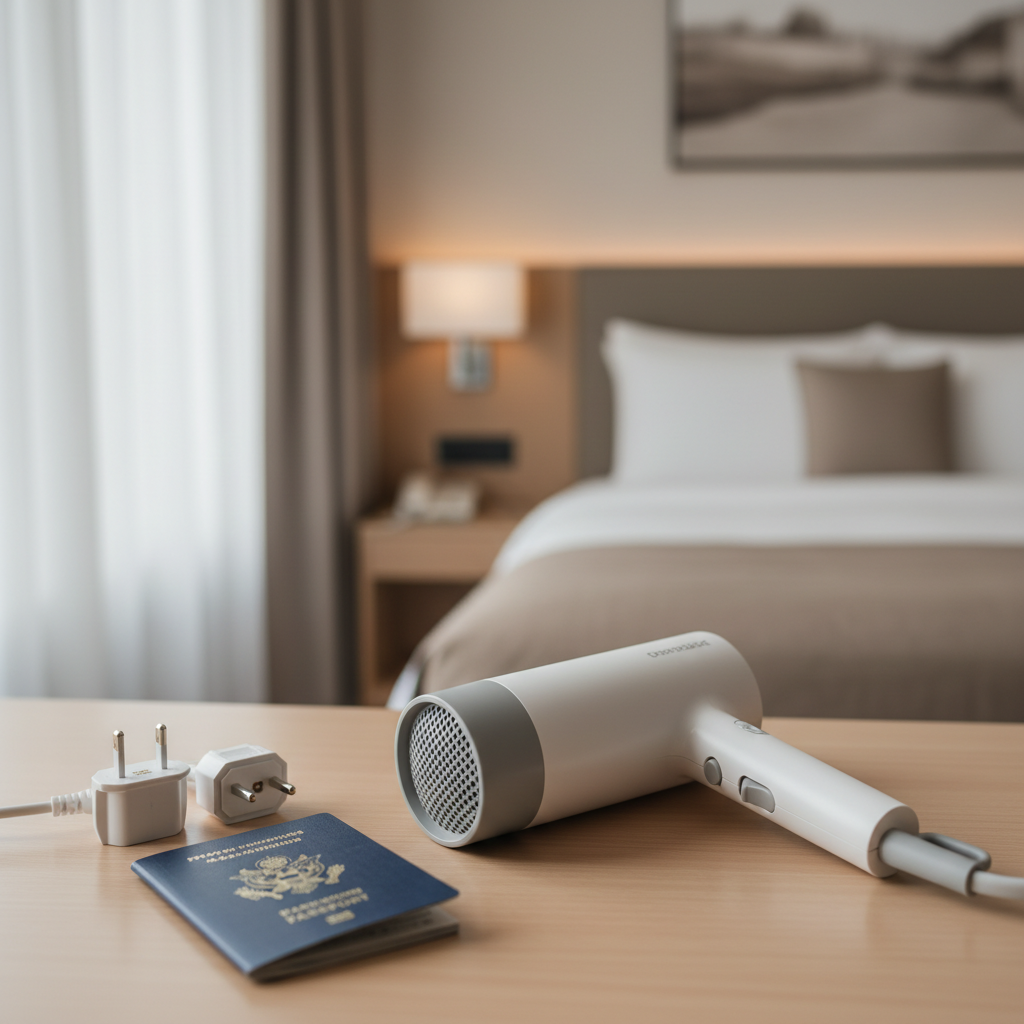
What “dual voltage” really means for a travel hair dryer
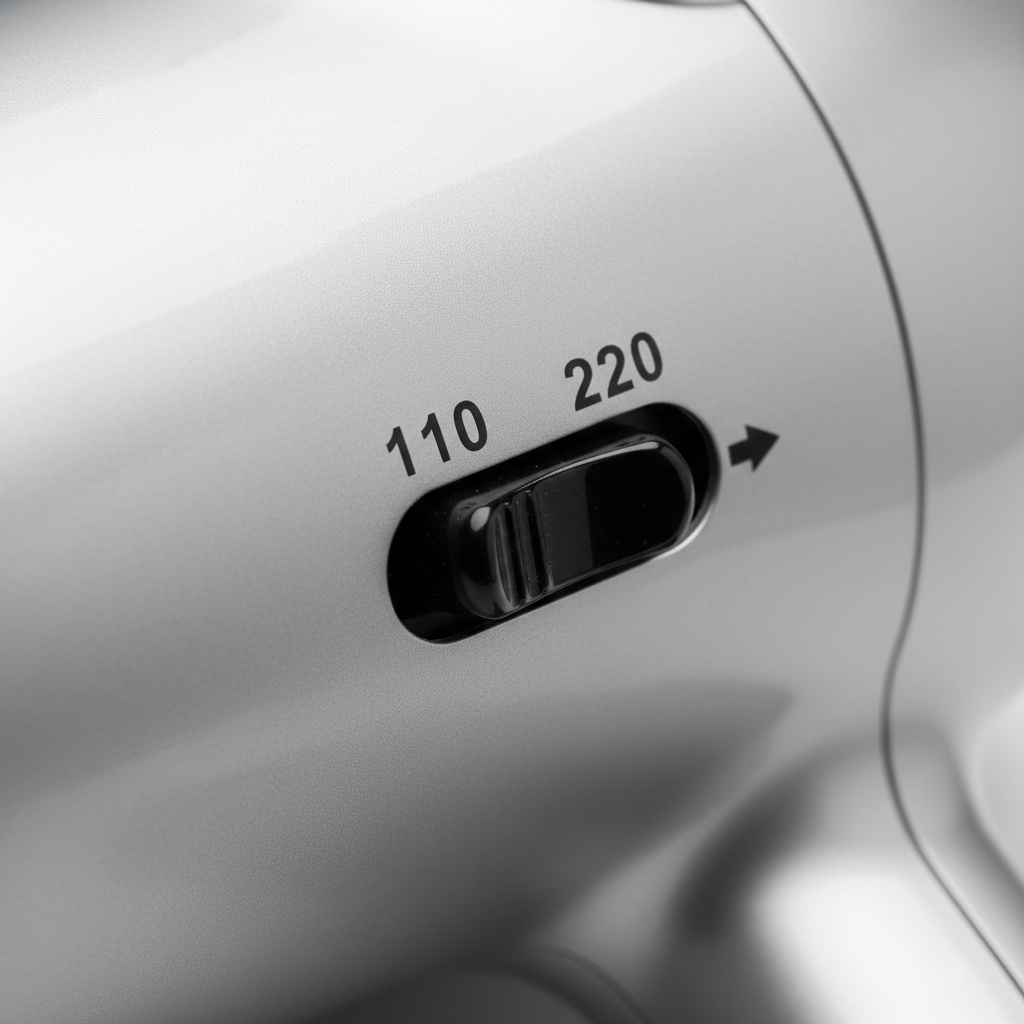
A true dual-voltage dryer can operate on both North American power (typically 110-120V) and many international grids (commonly 220-240V). The practical test is simple, you can switch voltage on the dryer or it auto-senses voltage, and it still runs normally.
According to U.S. Department of Energy, the United States uses a 120-volt standard for household electricity, which is why many full-size dryers sold in the U.S. assume 120V service. Lots of countries deliver higher voltage, so a 120V-only dryer overseas is where trouble starts.
Dual voltage vs. adapter vs. converter
- Plug adapter changes the pin shape so your plug fits the wall, it does not change voltage.
- Voltage converter changes voltage, many are heavy and may not handle hair-dryer wattage well.
- Dual-voltage dryer is built to accept either voltage, so you usually only need a plug adapter.
If you take one thing from this section, it’s this, “dual voltage” should reduce your packing, not add a converter brick.
Quick buying checklist: what matters most (and what’s just noise)
When people end up disappointed, it’s usually because they optimized for one spec and ignored the travel realities. Here’s what tends to matter most.
- Voltage support: clearly marked 120V/240V or 110-120V/220-240V, ideally with a visible switch.
- Wattage expectations: compact dryers often run lower wattage than your home dryer, drying may take longer on thick hair.
- Heat and airflow controls: at least two heat settings, a cool shot is a bonus but not mandatory.
- Size and fold: folding handle helps, but check if it adds wobble or feels flimsy.
- Weight and cord length: short cords can be annoying in older hotel bathrooms.
- Attachments you’ll actually use: a concentrator nozzle matters more than a tiny diffuser for most travelers.
- Safety basics: overheat protection and a sturdy intake filter you can clean.
Key point: the best travel hair dryer dual voltage for you depends on hair type and trip style, a carry-on-only business trip has different priorities than a two-week family itinerary.
How to choose by hair type and trip style
Specs matter, but your routine matters more. A dryer that’s “fine” for fine hair can feel useless on thick curls when you’re rushing to make a tour pickup.
If you have thick, long, or curly hair
- Prioritize stronger airflow and a nozzle that stays on securely.
- Look for multiple heat settings so you can balance speed and frizz.
- Be realistic about compact wattage, you may still need a bit more time.
If you have fine hair or short hair
- Overheating is the bigger risk than drying time, lower heat helps.
- A lighter dryer with a stable low setting often feels better than “max power.”
If you pack carry-on only
- Weight, folding design, and a tough casing matter more than extras.
- Skip big converters, aim for true dual voltage plus a small adapter.
If you stay in older hotels or cruise cabins
- Lower wattage may trip circuits less often, but can dry slower.
- Confirm bathroom outlets, some are “shavers only” and not meant for dryers.
A practical comparison table (what to look for in listings)
Online product pages can be messy, so it helps to compare features in a simple grid. Use this as a template when you’re evaluating any candidate.
| Feature | Good sign | Potential red flag |
|---|---|---|
| Voltage labeling | 110-120V / 220-240V clearly printed | “Worldwide” with no voltage range |
| Switching method | Physical switch or auto-sensing explained | No mention of how it changes voltage |
| Wattage | Listed plainly, with notes on travel use | Hidden or inconsistent across images |
| Attachments | Concentrator included, secure fit | Attachments look generic, no fit detail |
| Heat settings | 2+ heat levels, ideally a cool option | Single high heat only |
| Safety features | Overheat protection mentioned | No safety language at all |
Real-world setup: how to use a dual-voltage dryer abroad without drama
Even a great dryer can fail the trip if you set it up wrong at 6 a.m. in a dim bathroom. This is the quick routine that prevents most mishaps.
Step-by-step
- Confirm your destination voltage (many countries run 220-240V), then pick the correct plug adapter.
- Check the dryer’s voltage setting before plugging in, if it has a switch, set it while the dryer is off and unplugged.
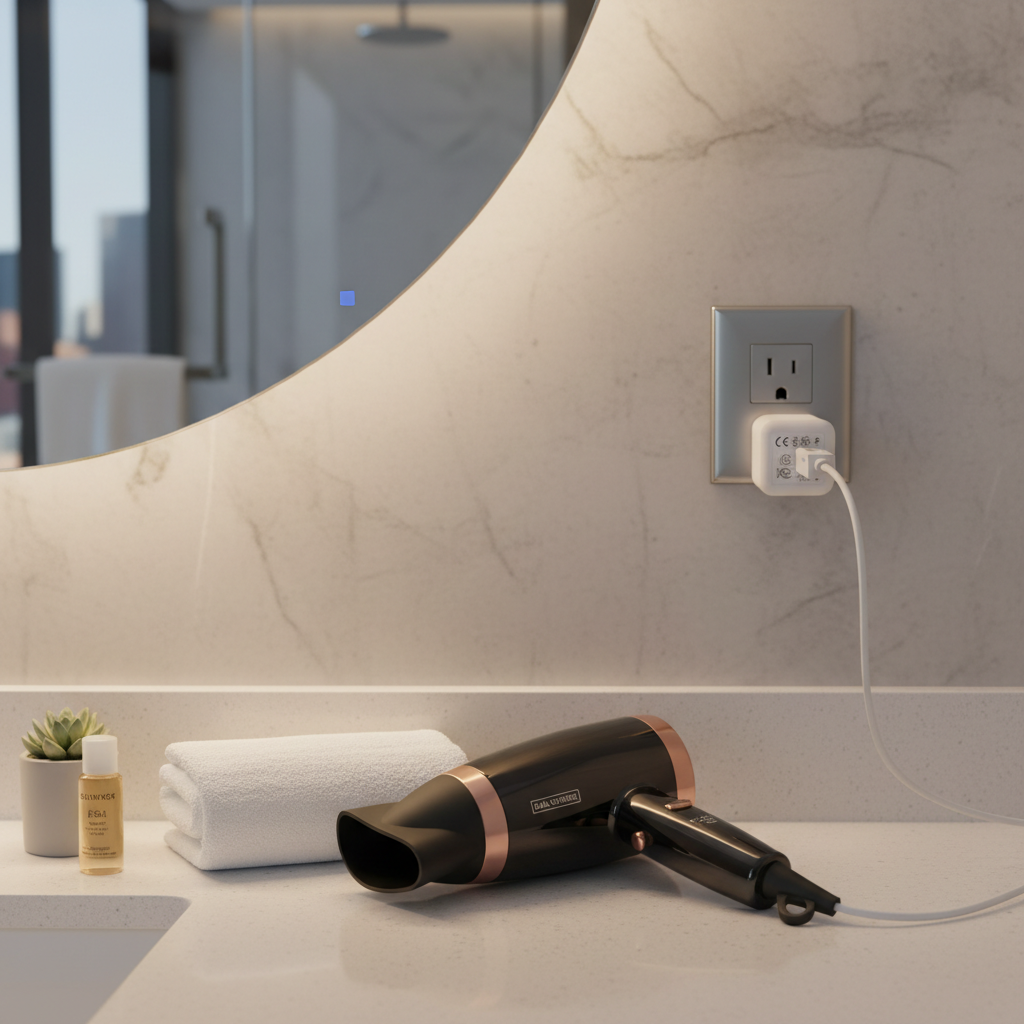
- Plug directly into the wall when possible, hotel extension blocks and cheap multi-taps can overheat with high-watt tools.
- Start on low for a few seconds, then increase heat and speed once you know the circuit holds.
- Keep the intake clear, towels and robe belts love to get sucked into compact dryers.
According to U.S. Consumer Product Safety Commission, many hair dryer incidents relate to electrical hazards around water, so keep the basics tight, dry hands, distance from sinks and tubs, and unplug when you’re done. If you’re unsure about an outlet, ask the front desk.
Common mistakes that make “dual voltage” feel useless
People blame the dryer, but the failure is often the setup or expectations. These are the patterns that come up again and again.
- Forgetting the voltage switch, plugging a 120V setting into 230V can cause damage fast, in some cases it may trip protection, in other cases it may not.
- Assuming an adapter converts power, the pin shape changes, the voltage does not.
- Using a “shaver only” outlet, some bathrooms label these clearly, they’re not designed for high-watt tools.
- Expecting salon speed from a tiny dryer, compact units often trade wattage for portability.
- Blocking the intake and triggering overheat shutoff, it feels like “the dryer died,” but it’s just protecting itself.
If you’re shopping specifically for the best travel hair dryer dual voltage, check product photos for the voltage marking and switch placement, it’s often more reliable than a vague bullet point.
Conclusion: what I’d buy (and how to decide in 2 minutes)
The “best” choice is the one that matches your hair and your destinations, not the one with the loudest wattage claim. I’d pick a true dual-voltage model with a clearly labeled switch or auto-sensing, two heat settings, a secure concentrator nozzle, and a build that won’t crack in a carry-on.
If you want a two-minute decision rule, start by confirming dual-voltage labeling, then choose based on airflow and heat control, and only after that worry about extras like diffusers. Do that, and you usually end up with a dryer you actually pack again.
Action step: before you check out, add a small universal plug adapter to the same cart, and when the dryer arrives, test the switch and attachments at home so you’re not learning on day one of your trip.
FAQ
How do I know if a travel hair dryer is truly dual voltage?
Look for a printed range like 110-120V and 220-240V on the body or label, plus a switch or clear statement that it auto-senses. If the listing only says “international use,” I’d verify with photos or the manual.
Do I need a voltage converter with a dual-voltage hair dryer?
Usually no, you typically only need a plug adapter to match the outlet shape. A converter is more common with 120V-only dryers, and many small converters struggle with high-watt heating appliances.
Why does my dual-voltage travel dryer feel weak overseas?
Many compact dryers run lower wattage than full-size home models, and some also have smaller fans. The voltage may be correct, but airflow and heat output still vary by model.
Can I use a dual-voltage dryer in a hotel bathroom “shaver” outlet?
Often no, those outlets are designed for low-power devices and can be isolated through transformers. When in doubt, use a standard room outlet and keep water safety in mind.
Is “auto dual voltage” better than a manual switch?
Auto-sensing can be convenient and removes one failure point, but I still like seeing clear voltage markings. Manual switches work well too, as long as you remember to set them before plugging in.
What wattage is “enough” for a travel hair dryer?
It depends on hair density and how fast you want to dry, many travelers are okay with mid-range wattage if airflow is decent. If you have thick hair and hate long dry times, prioritize airflow and a concentrator nozzle as much as the watt number.
What’s the safest way to travel with heat tools internationally?
Pack devices with clear voltage support, avoid sketchy power strips, keep cords and hands dry, and unplug after use. If you’re unsure about an outlet or local electrical standards, asking the hotel or a qualified electrician is the safer move.
If you’re trying to pick the best travel hair dryer dual voltage without spending an afternoon decoding listings, a short checklist and your destination voltage will get you most of the way there, and if you share your hair type plus where you’re headed, it’s easier to narrow to the few models that make sense.