
Allergy medicine travel guide planning usually comes down to one thing: you want your symptoms controlled without turning your trip into a pharmacy scavenger hunt.
If you travel with seasonal allergies, asthma-allergy overlap, food allergies, or chronic hives, the “what if I forget it?” stress is real, and it tends to hit at the worst time, a red-eye flight, a remote hike, or day one of a conference.
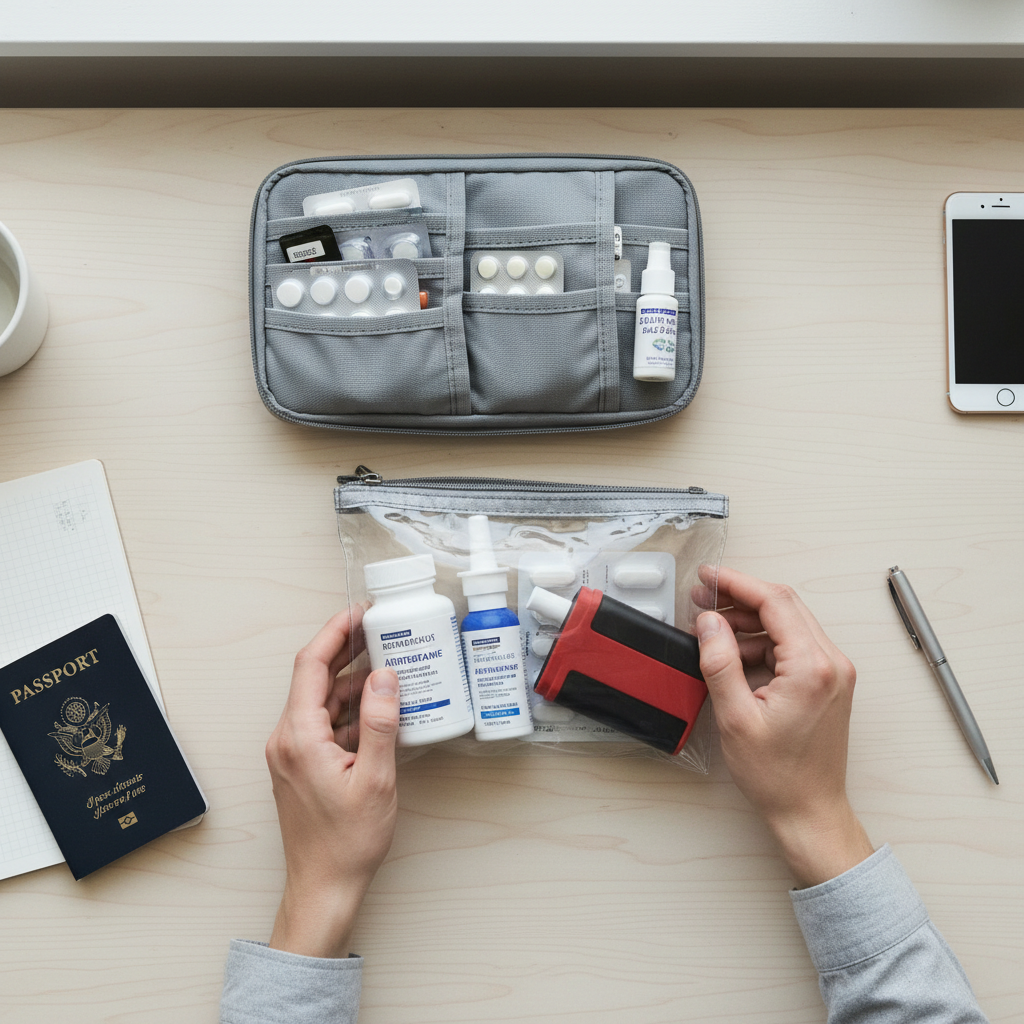
This guide focuses on practical choices: what to bring, what to keep in your carry-on, how to store meds in heat or humidity, and how to handle TSA, customs, and refills without drama. It also flags the moments when a quick check-in with a clinician is smarter than guessing.
What usually goes wrong when traveling with allergy meds
Most travel allergy problems are boring, predictable, and preventable, which is good news. The tricky part is people often plan for the flight, not for the full trip.
- Pack-splitting mistakes: meds end up only in checked luggage, then the bag takes its own vacation.
- Time-zone drift: daily meds slide forward or backward until you miss doses or double up.
- Trigger mismatch: you plan for pollen, but the hotel has dust, fragrance, and a strong cleaning cycle.
- Storage issues: heat in a car, humidity near the beach, or freezing temps can degrade some products.
- Documentation gaps: international trips sometimes require extra caution with prescriptions, especially for injectables.
According to the CDC, travelers should keep medicines in original, labeled containers and pack them in carry-on luggage to avoid loss and delays.
Quick self-check: what kind of traveler are you?
Before you make a packing list, decide which bucket you’re in. It changes what “enough meds” means.
- Occasional symptoms: you take antihistamines “as needed,” rarely use sprays, no history of severe reactions.
- Predictable seasonal allergies: you do best with daily control meds during certain months, symptoms return fast if you skip.
- Multi-trigger or chronic: you rely on a routine that includes nasal sprays, eye drops, inhalers, or prescription options.
- Higher-risk allergy: you carry an epinephrine auto-injector, have anaphylaxis history, or have asthma plus allergies.
If you’re in the last group, build redundancy, meaning backups and a plan for “what if” scenarios, not just “what I usually do at home.”
Build your travel kit: what to pack (and where to pack it)
A solid allergy medicine travel guide kit is less about bringing everything, more about bringing the right mix for prevention and rescue.
Carry-on essentials (don’t negotiate these)
- Daily controller meds for the entire trip, plus extra days for delays.
- Fast-acting antihistamine you already tolerate well.
- Nasal spray if it’s part of your routine, many people under-pack this and regret it.
- Eye drops if your eyes flare in dry cabin air or hotel HVAC.
- Epinephrine auto-injector (if prescribed), and ideally a second device if your clinician recommended it.
- Rescue inhaler if you have asthma symptoms or have been prescribed one.
Keep your “must-not-miss” meds in one pouch that stays on your body or in your personal item, not in the overhead bin roulette.
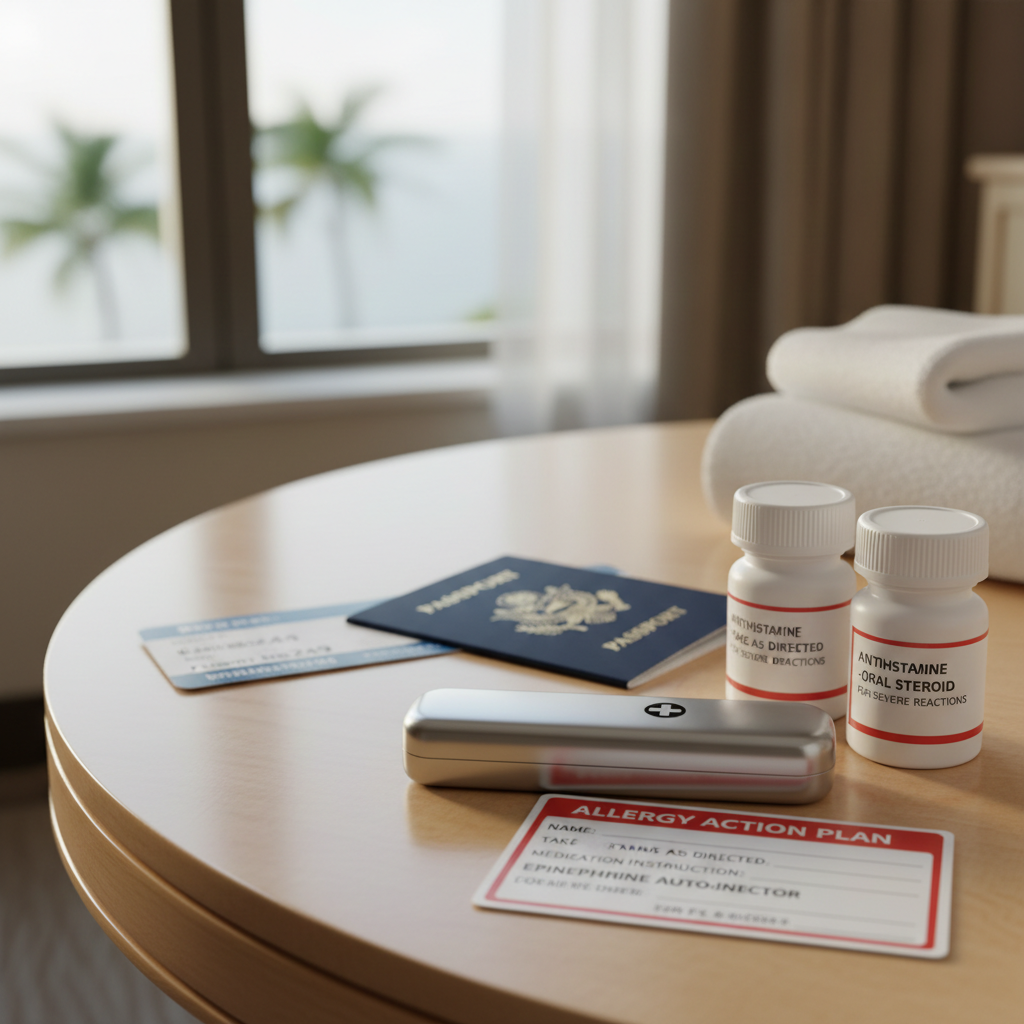
Checked luggage (only backups)
- Extra non-urgent supplies, for example spare tablets or an extra nasal spray
- Bulk items you can afford to lose for a day or two
If losing it would make you sick on day one, it doesn’t belong in checked luggage.
TSA, liquids, and labels: how to avoid airport friction
Airport screening is usually smooth when your meds are organized and labeled. The “problem” moments often happen when people decant everything into mystery pill cases.
- Keep prescription labels when possible, especially for injectables and controlled items.
- Liquids and sprays: typical TSA liquid rules apply, but medically necessary liquids can be allowed in reasonable quantities. Expect extra screening if sizes exceed standard limits.
- Tell, don’t debate: if you carry an auto-injector or multiple meds, a calm heads-up to the officer usually works better than waiting for confusion.
According to the TSA, passengers may bring medically necessary liquids, medications, and ice packs, and it helps to declare them for inspection.
Storage and climate: keeping meds effective on the road
Most allergy meds are forgiving, but travel adds heat, cold, and humidity, which can shorten shelf life or reduce effectiveness in some situations.
- Heat: avoid leaving meds in a parked car, beach bag in full sun, or next to a hotel window.
- Humidity: keep tablets in original blister packs or tightly closed bottles, bathrooms are sneaky humid.
- Cold: don’t let liquids freeze in a checked bag or on winter road trips.
- Auto-injectors: follow the manufacturer’s storage guidance, and replace if the solution looks discolored or cloudy.
When in doubt, read the package labeling, and if you’re unsure about a product’s condition, a pharmacist can often help you make a safe call.
International trips: prescriptions, generics, and refill planning
This is where an allergy medicine travel guide becomes more than packing tips. Different countries have different rules, and brand names don’t always translate cleanly.
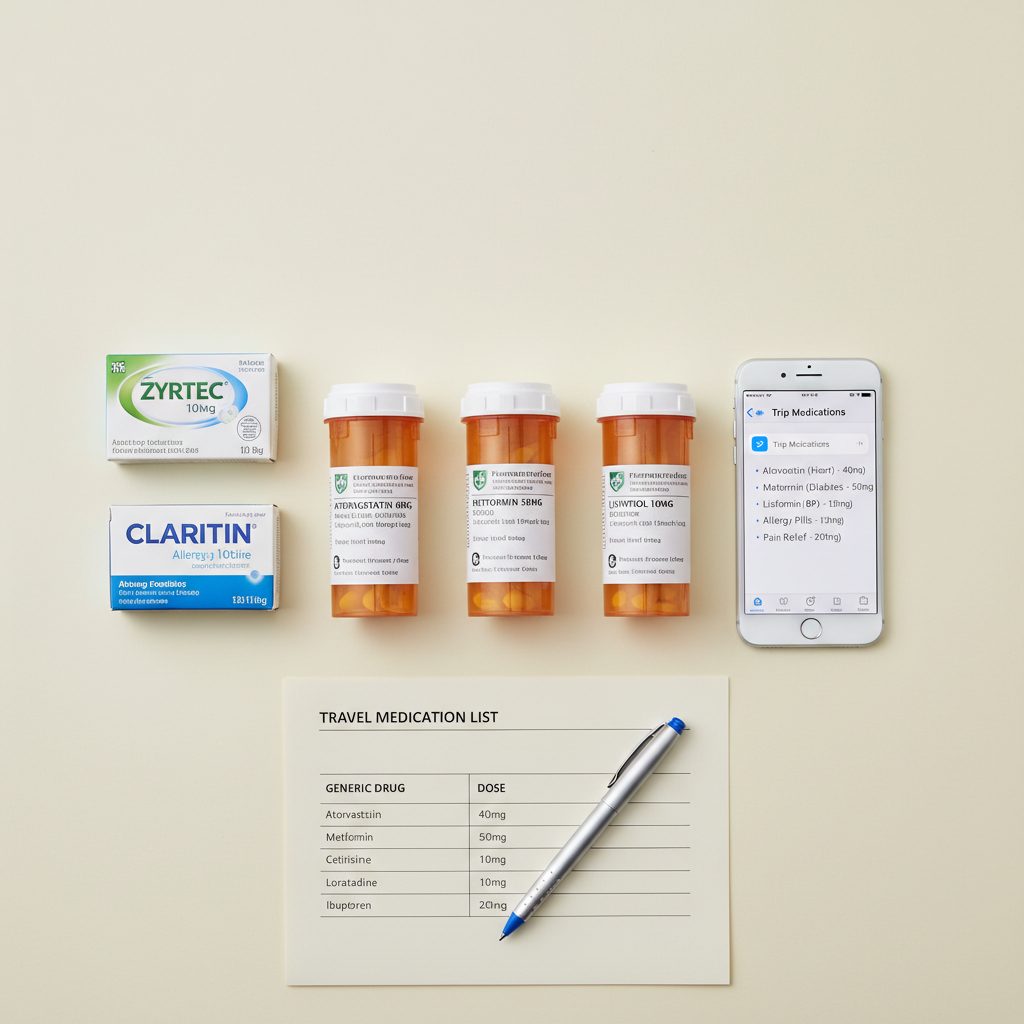
- Bring a medication list with generic names, doses, and why you take them, a simple note on your phone works.
- Carry prescriptions or a clinician letter for higher-scrutiny items, especially injectables and liquids.
- Plan refills early: if your trip overlaps refill timing, ask your insurer/pharmacy about a vacation override.
- Don’t assume OTC is identical: the same ingredient may exist, but dosing forms and strengths can differ.
According to the U.S. Department of State, travelers should check destination-specific rules for medications and carry them in original containers.
Practical itinerary plans: flights, road trips, outdoors, and hotels
Different trip styles create different failure points. A little pre-planning saves you from chasing a pharmacy in unfamiliar neighborhoods.
Flights
- Take daily meds on your home schedule until travel starts, then shift gently if needed.
- Pack water-friendly options, dry cabin air can make nasal symptoms feel worse.
- If you have food allergy risk, consider bringing safe snacks, and keep epinephrine accessible.
Road trips
- Store meds in the cabin, not the trunk, heat swings are real.
- Set a phone reminder for doses, long drives blur time.
Outdoor-heavy trips
- Consider a simple “pollen plan,” hat/sunglasses, shower after high exposure, change clothes.
- Know your rescue steps if symptoms escalate, especially if you’re far from urgent care.
Hotels and rentals
- Fragrance and dust are common triggers, request fragrance-free rooms if available.
- If you’re sensitive, a quick wipe-down of high-touch surfaces can reduce irritation, though it won’t make a room allergy-proof.
A simple packing table you can screenshot
Use this as a quick build sheet, then adjust for your own prescriptions and triggers.
| Item | Bring in Carry-on? | Why it matters |
|---|---|---|
| Daily antihistamine | Yes | Keeps baseline symptoms down when triggers change |
| Nasal steroid spray | Yes | Often needs consistent use, skipping can lead to rebound congestion |
| Antihistamine eye drops | Yes | Cabin air and hotel HVAC can flare itchy eyes |
| Epinephrine auto-injector (if prescribed) | Yes, on your person | Time-sensitive emergency medication |
| Rescue inhaler (if prescribed) | Yes | Breathing symptoms can escalate faster during travel |
| Backup meds | Optional | Helps if you spill, lose, or extend the trip |
| Medication list with generic names | Yes | Makes refills and substitutions easier, especially abroad |
Common mistakes and “smart tweaks” that actually help
People love over-optimizing this stuff, then forget the basics. The basics win.
- Mistake: switching to a new med right before travel. Tweak: if you want to try something new, test it ahead of time so side effects don’t surprise you mid-trip.
- Mistake: relying on a single pill organizer with no labels. Tweak: keep at least one labeled bottle or a printed list for identification.
- Mistake: taking “extra” to catch up. Tweak: follow the label or your prescriber’s plan, and ask a pharmacist if timing gets messy across time zones.
- Mistake: forgetting non-med tools. Tweak: sunglasses, a small saline spray, and fragrance-free wipes can be surprisingly helpful in real travel environments.
When to get professional guidance (worth the quick call)
Travel is not the time to wing it if your risk is higher. A clinician or pharmacist can often give clear, quick guidance.
- You’ve had anaphylaxis before, or you’re unsure whether your symptoms qualify.
- You need help building an action plan for food allergy or asthma symptoms while away from home.
- Your meds cause drowsiness, and you’ll be driving, hiking, or working long days.
- You’re traveling internationally with injectables, or you’re unsure about medication legality at your destination.
If you’re actively having severe symptoms, such as trouble breathing, swelling of the lips or tongue, or you feel faint, seek urgent medical care immediately.
Key takeaways
- Carry-on beats checked bag for anything that prevents a bad day one.
- Redundancy matters if you’re higher-risk, bring backups and keep them accessible.
- Labels and generic names reduce friction at airports and pharmacies.
- Storage is not trivia, heat and humidity are common reasons meds “mysteriously” seem weaker.
Conclusion: a calmer trip is mostly a packing system
A good allergy medicine travel guide isn’t about carrying a suitcase of supplies, it’s about making sure your most important meds stay accessible, stable, and easy to identify. Start with your carry-on kit, add a small buffer for delays, and write down the generic names so you can adapt if plans change.
If you want one action step today, set up a dedicated travel pouch and keep it stocked, then you’re not rebuilding the whole system the night before you leave.
FAQ
How many days of allergy medicine should I pack for a trip?
Many travelers do well with the trip length plus a few extra days for delays. If missing doses causes symptoms to rebound quickly for you, build a bigger buffer and keep it in your carry-on.
Can I bring allergy meds through TSA if they’re liquids or sprays?
Usually yes, and medically necessary liquids can be permitted even when they exceed standard liquid limits. Keep items organized, expect possible extra screening, and declare them if helpful.
Should I keep pills in a pill organizer or original bottles?
A pill organizer is convenient, but at least one labeled container or a clear medication list can save you trouble if questions come up, especially on international itineraries.
What’s the safest place to store allergy meds during a road trip?
Inside the cabin, out of direct sunlight, works for many products. Trunks heat up fast, and that’s where tablets and auto-injectors can run into avoidable temperature stress.
Do I need a doctor’s note for an epinephrine auto-injector when traveling?
Often you can travel without a note, but a brief letter and labeled packaging may reduce friction, particularly internationally. Rules vary by destination, so it’s smart to check ahead.
Can I buy the same allergy medicine abroad if I forget mine?
Sometimes, but brand names and strengths differ, and OTC availability varies. A list with generic names and doses makes it much easier to find an equivalent with a pharmacist’s help.
Is it okay to try a new antihistamine right before a trip?
It can be risky because some options cause drowsiness or dry mouth in a way you don’t expect. If possible, test it at home first, and ask a pharmacist if you’re mixing products.
When should I treat allergy symptoms as an emergency while traveling?
If you have trouble breathing, widespread hives with swelling, vomiting after an exposure, or you feel faint, it may be an emergency. Use prescribed rescue medication and seek urgent care right away.
If you’re planning travel with allergies and want a more plug-and-play setup, consider asking your pharmacist or clinician to review your travel list, they can often spot interactions, timing issues, and refill gaps before you leave.