
how to keep skin hydrated while traveling comes down to a few practical moves that protect your skin barrier, reduce moisture loss, and keep your routine consistent even when your schedule is not.
If you have ever landed with tight cheeks, flaky patches, or that “my face feels smaller” sensation, you are not imagining it, travel stacks the odds against hydration. Dry cabin air, unfamiliar water, different climates, long days outside, and even a rushed cleanse can push skin into dehydration fast.
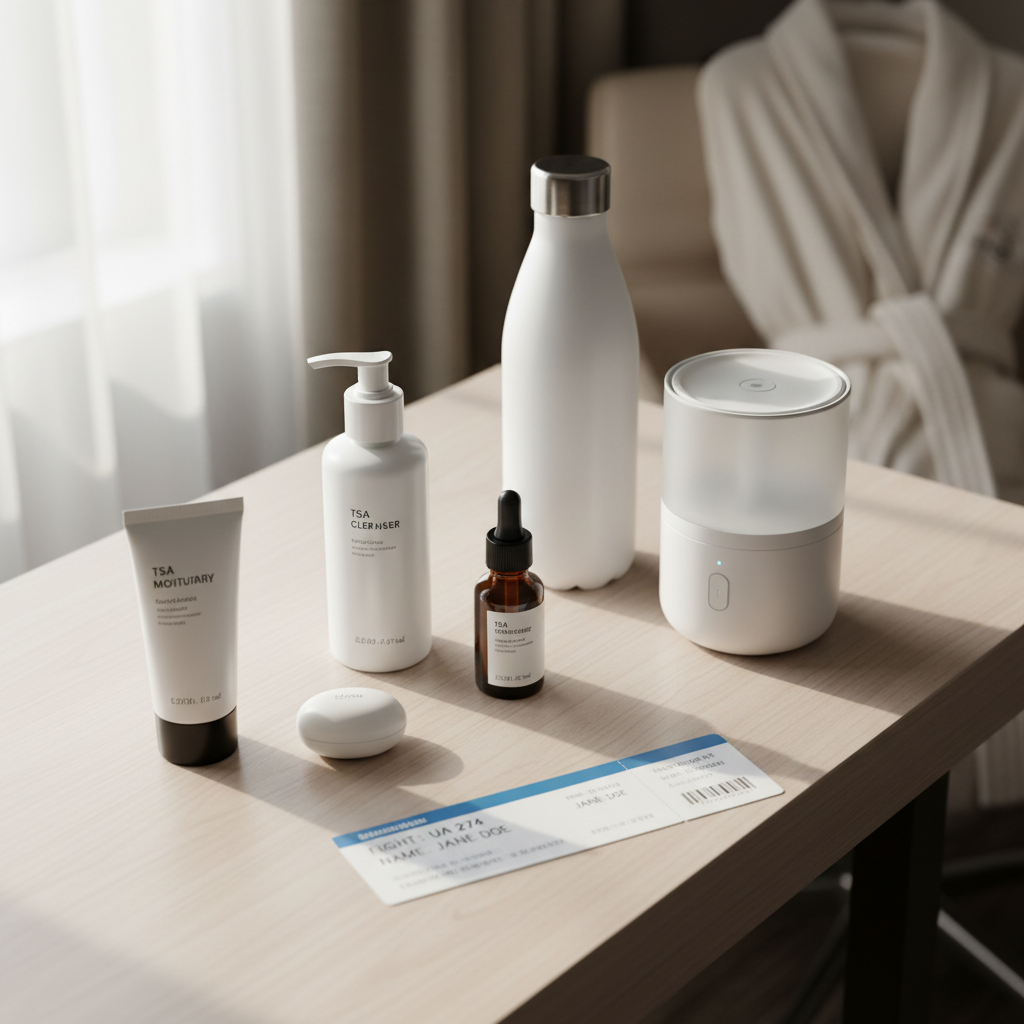
This guide stays grounded in what usually works in real life: quick pre-flight prep, a minimalist routine that survives time zones, and a packing plan that prevents the classic mistake of bringing ten products and using none.
Why travel dehydrates skin (and why it feels sudden)
Most “travel dryness” is not just about needing a heavier cream, it is about transepidermal water loss, meaning water escapes through the skin when the barrier is stressed. Travel conditions can add several triggers at once.
- Cabin air and low humidity: Airplane cabins tend to feel extremely dry, so skin loses water faster than you expect.
- Long-wear makeup and sunscreen: Great for staying put, not always great for comfort, especially if you skip proper removal.
- Over-cleansing after a long day: Hot water, harsh foaming cleansers, or double cleansing too aggressively can strip lipids.
- New climate shock: Cold wind, desert heat, or humid tropical air can all cause dehydration in different ways.
- Sleep disruption and stress: When you sleep less, many people notice skin looks dull and feels tighter.
According to the American Academy of Dermatology (AAD), moisturizers help trap water in the skin and support the barrier, which is exactly what travel tends to compromise.
A quick self-check: are you dehydrated, dry, or irritated?
These get mixed up, and the fix changes depending on which one you have. Dehydrated skin lacks water, dry skin lacks oil, irritated skin is inflamed, and travel can create any combo.
Fast checklist
- Dehydrated: tightness, fine “crinkly” lines, makeup looks patchy, skin feels better right after applying serum then dries again.
- Dry: rough texture, persistent flaking, feels better with richer cream and facial oil.
- Irritated/sensitized: stinging with products, redness, burning, new bumps after trying “travel minis.”
If you suspect irritation, treat the situation like a barrier problem: fewer actives, gentler cleansing, and a bland moisturizer for a few days often beats trying to exfoliate your way out.
Build a travel-proof routine (minimal steps, maximum payoff)
When people ask how to keep skin hydrated while traveling, what usually helps most is not adding more steps, it is picking the right steps and repeating them. Think: cleanse gently, add water, seal it in, protect.
| Step | What to use | Why it helps on trips |
|---|---|---|
| Cleanse | Gentle, low-fragrance cleanser | Removes sweat and sunscreen without stripping |
| Hydrate | Humectant serum or lotion (glycerin, hyaluronic acid) | Pulls water into upper layers, improves comfort fast |
| Seal | Ceramide moisturizer, or a thin occlusive on top | Reduces water loss in dry air and hotel AC |
| Protect (day) | Broad-spectrum sunscreen SPF 30+ | UV plus wind and cold can worsen dehydration signs |
Key point: In very dry environments, humectants feel great, but they still need a moisturizer on top, otherwise skin may feel tight again within an hour or two.
Flight-day strategy (before, during, after)
Flight days are their own category. You can do everything right at the destination, but if the travel day wrecks your barrier, you spend the first two vacation days “recovering” instead of enjoying.
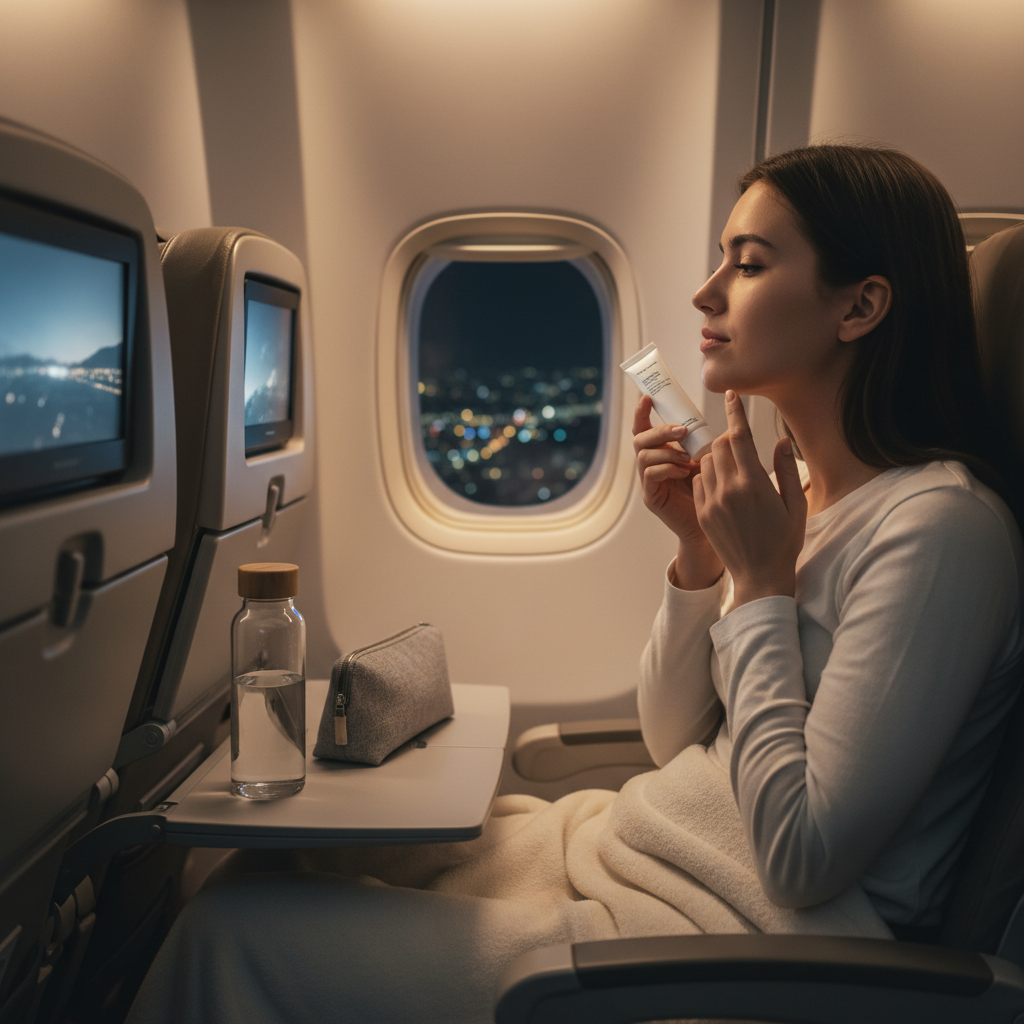
Before boarding
- Skip strong exfoliants the night before if your skin is already borderline.
- Apply hydrating layers, then a barrier moisturizer, especially around nose and mouth.
- Bring lip balm and a hand cream you actually like using.
During the flight
- Keep it simple: a light moisturizer is usually enough, avoid experimenting with acids or retinoids mid-flight.
- Hydration you can control: drink water regularly, and go easy on alcohol since it can contribute to dehydration in many people.
- Hands off your face: planes are touch-heavy environments, less face touching tends to mean fewer surprise breakouts.
After landing
- Cleanse gently to remove grime and sunscreen, then moisturize right away.
- If skin feels hot or reactive, a bland moisturizer and a short, lukewarm rinse often beats a long, hot shower.
Destination tweaks: hotel air, climate shifts, and water changes
Your routine should flex with the environment. What feels perfect at home can feel off in a dry hotel room or a windy city.
Dry hotel rooms
- Consider a small humidifier if you travel often, many people notice less tightness overnight.
- Keep your moisturizer on the nightstand, not in the bathroom, so you use it consistently.
- Shorten hot showers, heat can worsen dryness for a lot of skin types.
Cold weather trips
- Add a richer cream or a thin occlusive layer at night, especially on cheeks and around the eyes.
- Protect exposed skin from wind, even a scarf helps more than people think.
Hot or humid trips
- Use lightweight hydration plus a gel-cream if heavy products feel greasy.
- Prioritize sunscreen reapplication, sun exposure can make dehydration look worse even if you feel “oily.”
According to the Centers for Disease Control and Prevention (CDC), safe water practices vary by destination. If you are in a region where water safety is a concern, avoid rinsing with questionable water and stick to bottled water for brushing teeth, and if you have a medical skin condition, consider asking a clinician for destination-specific guidance.
Packing list that actually prevents dehydration (without overpacking)
People overpack skincare because they fear running out, then they skip steps because everything feels complicated. A tighter kit usually wins.
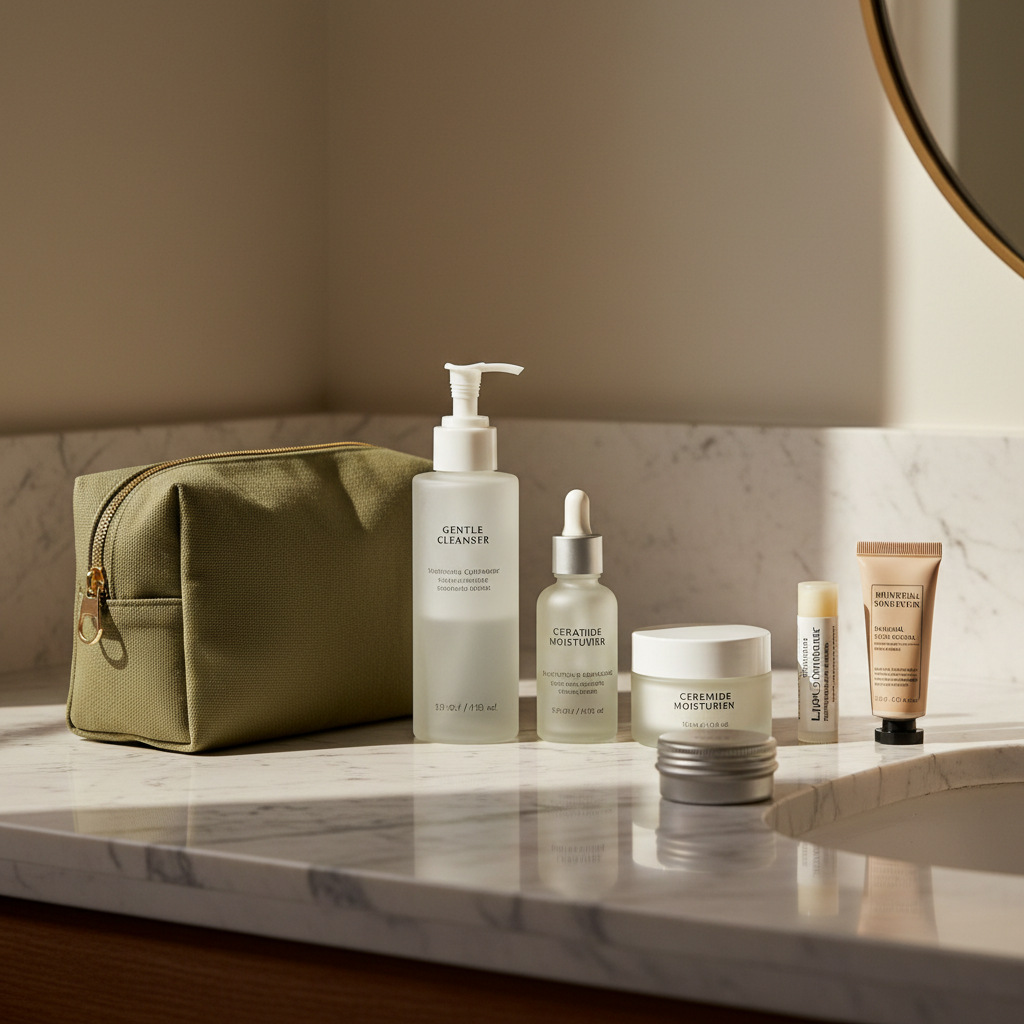
- Gentle cleanser: non-stripping, fragrance-light if you are sensitive.
- Hydrating layer: serum, essence, or lotion with glycerin or hyaluronic acid.
- Barrier moisturizer: ceramides, fatty acids, cholesterol are common “barrier-friendly” cues on labels.
- Sunscreen: broad-spectrum, comfortable enough to reapply.
- Spot occlusive: a small amount of petrolatum-based ointment for chapped areas.
- Hand cream + lip balm: these are usually the first to crack on travel days.
Practical rule: If you cannot describe exactly when you will use a product on the trip, it probably stays home.
Common mistakes that quietly make travel dryness worse
Most travel “fails” come from good intentions, especially trying new products because you finally have time. But skin tends to prefer predictability when the environment changes.
- Trying new actives on the trip: acids, retinoids, and strong vitamin C can irritate when skin is already stressed.
- Overusing face mists: mists feel refreshing, but without moisturizer afterward, they may not fix tightness for long.
- Using hotel soap on your face: it often runs harsh, even if it smells nice.
- Skipping sunscreen on “cloudy” days: UV still shows up, and sun damage can worsen dehydration signs.
- Thinking oily skin cannot be dehydrated: many people get both, oily shine with a tight, thirsty feel underneath.
When it makes sense to get professional help
If you get persistent cracking, significant redness, swelling, or painful burning, it may be more than simple dehydration. Eczema flares, contact dermatitis, rosacea, or infections can look like “dry travel skin” at first.
- If symptoms last more than a week despite a gentle routine, consider a dermatologist.
- If you have a known condition such as eczema or psoriasis, ask your clinician about a travel plan, especially if you need prescription topicals.
- If you develop hives, facial swelling, or trouble breathing after a new product, seek urgent medical care.
According to the American Academy of Dermatology (AAD), fragrance and harsh ingredients can trigger irritation in some people, so bringing familiar products is often the safer bet.
Conclusion: a simple plan you can repeat anywhere
how to keep skin hydrated while traveling usually has less to do with chasing the “perfect” product and more to do with protecting your barrier during transit, keeping hydration and moisturizer paired, and adjusting texture for the climate you land in.
Action steps to try on your next trip: pack a 4-step routine you can do half-asleep, moisturize before and after flights, and treat tightness as a signal to simplify rather than exfoliate.
FAQ
How can I keep my skin hydrated on a long flight without doing a full routine?
Use a gentle moisturizer before boarding, then reapply a thin layer if you feel tight mid-flight, and finish with a proper cleanse and moisturizer after landing. The goal is barrier support, not a 10-step routine at 35,000 feet.
Is drinking water enough to fix travel-related dryness?
Hydration helps overall, but skin comfort often depends on topical moisture plus barrier support. Many people feel better when they combine regular water intake with moisturizer and sunscreen.
Should I use face mist on the plane?
You can, but it tends to work best as a “hydration booster” under moisturizer. If you mist and do nothing else, the relief may be brief, especially in very dry cabin air.
What ingredients are most helpful for dehydrated travel skin?
Glycerin, hyaluronic acid, and panthenol are common hydrators, while ceramides and fatty acids support the barrier. If you are sensitive, fragrance-free options often reduce the chance of irritation.
How do I keep skin hydrated while traveling to a cold climate?
Use a richer moisturizer, protect skin from wind, and avoid long hot showers. Many people also do better when they pause strong exfoliants until skin adapts.
Can I use retinol or acids while traveling?
If your skin tolerates them well at home, you might continue, but travel is when irritation sneaks in. If you are flying, changing climates, or spending more time outdoors, it can be smarter to pause actives and focus on barrier care.
Why does my skin break out and feel dry at the same time on trips?
That combo often points to dehydration plus occlusion, or irritation plus stress. A gentler cleanse, lighter hydration layers, and consistent sunscreen removal usually helps more than adding stronger treatments.
If you are trying to keep things simple, build one “travel kit” you trust and stop reinventing your routine on every trip, it is often the easiest way to keep skin comfortable and hydrated without turning your carry-on into a full bathroom cabinet.